











Se promener à La Garde-Freinet
La Garde-Freinet donne une lecture interieure du golfe: fort medieval, legendes sarrasines, quartz, chataigniers, chenes-lieges, fontaines et routes de crete au coeur des Maures.
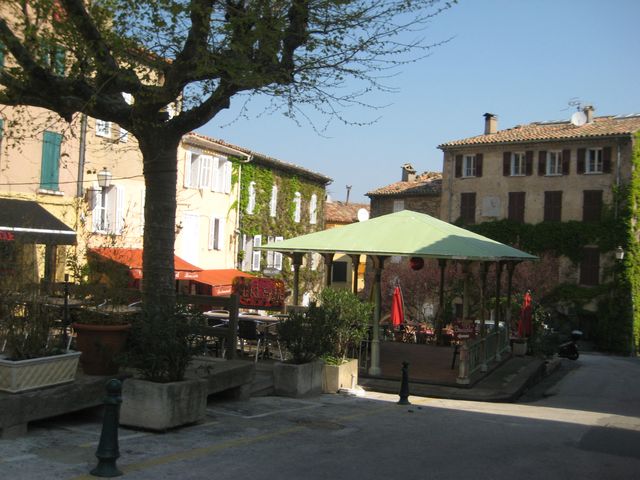
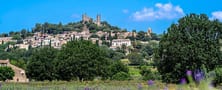
La Garde-Freinet change complètement la perception du golfe. Ici, il n'y a ni front de mer ni grande baie pour orienter la promenade. Le village se tient dans le massif des Maures, parmi les pentes, les forêts, les hameaux et les routes de crête. C'est une commune d'intérieur, mais elle garde pourtant des liens constants avec les plaines, les villages voisins et la Méditerranée au loin.
Ce déplacement de point de vue fait tout son intérêt. La Garde-Freinet permet de comprendre ce que devient le golfe quand on quitte les quais: un territoire de relief, de pierre, d'eau rare, de forêt, de pastoralisme, d'artisanat et de mémoire médiévale.
Fort Freinet, village de hauteur et legendes
Le site de Fort Freinet domine toute la lecture patrimoniale du secteur. La tradition y voyait jadis un repaire sarrasin, mais les fouilles ont montré qu'il s'agissait en réalité d'un village fortifié médiéval occupé à la fin du XIIe siècle puis progressivement abandonné à la fin du XIIIe. Le fossé taillé dans le rocher, la position défensive et l'étendue de la vue suffisent à comprendre la puissance du lieu.
Le village actuel, installé plus bas, a gardé cette mémoire dans son nom, dans ses chemins et dans une culture locale très attachée au relief. Les ruelles pavées, les passages, les maisons de pierre et la table d'orientation prolongent cette relation constante entre habitat et hauteur.
Fontaines, chapelles, moulins et vie de village
La Fontaine Vieille, le lavoir, la chapelle Saint-Jean, les moulins et plusieurs hameaux rappellent que La Garde-Freinet s'est organisée autour de l'eau disponible, des chemins et d'une vie rurale longtemps dispersée. Dans un pays où l'eau a toujours compté, les fontaines et les sources ne sont pas des détails décoratifs; elles sont des points de survie, de travail et de rencontre.
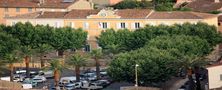
Le village reste aujourd'hui un centre très habité, animé par les places, les fêtes, les marchés et les commerces, mais cette animation garde une mesure intérieure. Ici, le patrimoine se découvre moins par grands monuments que par une série de repères modestes reliés entre eux par la pente, la pierre et l'usage quotidien.
Geologie, forets et botanique des Maures
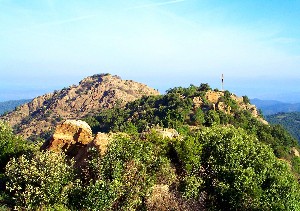
Le relief ici montre très bien la matière des Maures. Les Roches blanches doivent leur nom au quartz visible dans le paysage. Les pentes, les sols maigres, les vallons et les secteurs forestiers donnent au territoire une rugosité très différente du littoral. La géologie n'est jamais abstraite; elle façonne les chemins, les vues et les usages.
La botanique suit cette base: châtaigniers, chênes-lièges, maquis, figuiers, ruchers restaurés, sous-bois frais par endroits et végétation sèche sur les crêtes. Cette diversité rend la commune très sensible aux saisons, aux odeurs de forêt, aux floraisons et aux variations d'ombre. On comprend vite que La Garde-Freinet se lit autant par sa flore que par ses pierres.
Culture locale et economie rurale
L'identité du village reste liée au liège, au bois, aux cultures de coteau, aux chemins de transhumance et à une vie de hameaux qui a laissé des traces fortes. La mémoire du travail forestier ou des petites exploitations accompagne encore la lecture du territoire, même quand le village vit désormais aussi de services, de tourisme et de résidence.
Les fêtes locales, la soupe au pistou, la kermesse, les rendez-vous associatifs et les ateliers entretiennent une sociabilité d'intérieur très différente de la vie portuaire du golfe. Cette tonalité compte beaucoup: La Garde-Freinet ne propose pas un décor de montagne, mais une culture provençale du relief encore active.
Comment l'aborder aujourd'hui
Il faut prendre le temps du village, puis gagner un point de vue ou un sentier bien choisi: Fort Freinet, Saint-Clément, Peygros, les Roches blanches ou les chemins de hameaux. Ce va-et-vient entre le centre et la forêt permet de comprendre la commune dans son vrai rythme.
En dehors de l'été, la lecture devient encore meilleure. Les odeurs de liège, de terre humide ou de châtaignier ressortent davantage, les vues se nettoient et l'on voit plus clairement comment patrimoine, géologie et botanique tiennent le paysage ensemble.
Après La Garde-Freinet, on peut filer vers Le Plan-de-la-Tour ou revenir à Cogolin pour retrouver la plaine.
Au XIXe siècle, La Garde-Freinet comptait parmi les centres importants du liège dans le massif des Maures. L’écorçage, le traitement et le façonnage faisaient vivre une part importante de la population.
Sources
Chronique au fil du temps
Fort Freinet : lire l’histoire en marchant depuis La Garde-Freinet
Depuis le centre de La Garde-Freinet, la montée vers Fort Freinet fait passer très vite des rues du village au rocher, à la forêt et à un ancien site de hauteur qui domine les passages intérieurs du massif.
