




SIMCA
Founded at the end of 1934 around Henri Théodore Pigozzi, Simca was created to build in France Fiat cars that had become too expensive to import. The marque then moved from licensed assembly to major models such as the Aronde, the Simca 1000 and the 1100 before the Chrysler and Talbot years.

Simca has a particular place in French motoring history because the marque did not begin as an old established manufacturer. It grew out of a very practical industrial problem. In the early 1930s Fiat was selling well in France, but rising customs duties made imported cars increasingly expensive. Henri Théodore Pigozzi, who knew Fiat and its commercial network extremely well, pushed a straightforward solution: build in France the cars that had become too costly to ship from Italy. Simca was born from that shift.
In a little over thirty years the company moved from licensed assembly to a range that mattered deeply on the French market. The first Simcas stayed very close to Fiat engineering. Then came the models that gave the marque its own weight: the Aronde in the early 1950s, the Simca 1000 in 1961 and the 1100 in 1967. In between, Simca absorbed Ford SAF at Poissy, moved gradually into Chrysler's orbit and eventually disappeared as an independent industrial name before the Talbot years. The story is short by automotive standards, but dense and full of sharp changes in direction.
From SAFAF to the Nanterre factory
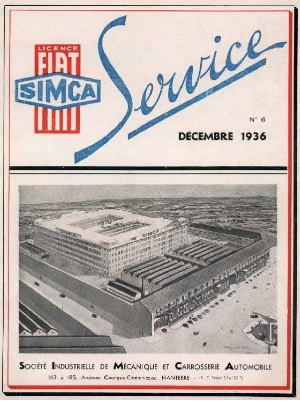
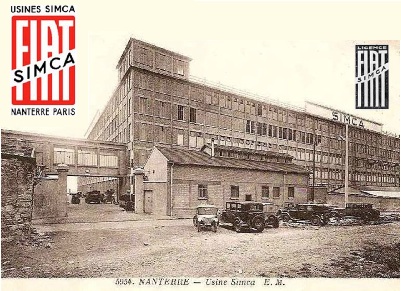
Before 1935, the Société Anonyme Française des Automobiles Fiat, or SAFAF, was already importing and building Fiat cars in France. The problem was not a lack of customers. It was the economic framework of the time. Protectionism made imported cars more expensive and forced a different industrial setup. Simca was created at the end of 1934 in that context. Early in 1935 the new company took over Donnet and, above all, its modern factory at Nanterre. That gave the brand a serious production base from the start.
Henri Théodore Pigozzi, former managing director of SAFAF, became managing director of Simca in 1935. His role was decisive. He was not simply selling French-built Fiats. He was shaping a company able to produce, adapt and distribute cars for the local market. The first vehicles built at Nanterre were the Simca-Fiat 6 CV and 11 CV. At that point Simca was not yet fully independent in technical terms, but the industrial structure was already there.
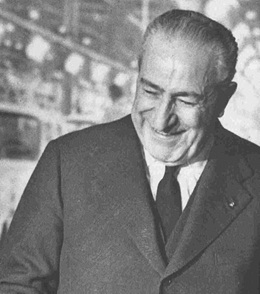
This first phase matters because it explains everything that follows. Simca did not begin as an abstract national project. It was built from a commercial network, a factory taken over at the right moment and a clear strategy: manufacture in France cars that remained technically tied to Fiat but could be sold without the increasing penalty of imports. That foundation explains both the speed of the launch and the initial dependence on Italian engineering.
Simca 5 and Simca 8, the years of consolidation
The first real step in public recognition came in the spring of 1936 with the Simca 5. The car derived from the Fiat 500 Topolino and used a four-cylinder 570 cc engine rated at 13 hp. There was nothing extravagant about it in sporting terms, but it answered the problem Simca had to solve at the time: offer a small, economical and genuinely saleable car. In a country where car ownership was still expensive for many households, that positioning mattered.
The Simca 8, shown in the autumn of 1937, moved the brand another step forward. Derived from the Fiat 508C, or Fiat 1100, it used a 1,089.5 cc four-cylinder engine delivering 32 hp at 4,000 rpm. Its specification was more ambitious: an aerodynamic steel body, independent front suspension, hydraulic drum brakes on all four wheels and a four-speed gearbox. Simca was making it clear that it did not want to remain confined to tiny cars.
Period publicity made much of endurance. In the spring of 1938, under the supervision of the Automobile Club de France, a Simca 8 completed a sequence of runs at Montlhéry, on the road and in city traffic. The point was not only promotional. Simca was already trying to build a reputation for everyday strength and reliability, not merely price. In 1939, barchettas based on the Simca 8 chassis entered Le Mans and secured a class win together with the Index of Performance for the Gordini-Scaron crew.
After the war, Simca restarted its range while staying close to that Fiat lineage. The Simca 6 appeared in the autumn of 1947 as an evolution of the Simca 5. From 1950 onward, Facel-Métallon built Simca 8 Sport coupés and cabriolets. The company was learning to cover several uses at once: small popular cars, compact family saloons and more elegant coachbuilt derivatives. The range still owed much to Fiat, but the Simca image was becoming clearer.
1951, the Aronde changes Simca's scale
The real turning point came in the spring of 1951 with the Simca 9 Aronde. This was the model that truly carried the brand from heavy Fiat influence to a carmaker able to impose one of its own cars on the French market. The Aronde started with a 1,221 cc engine. Its pontoon styling, curved windscreen and more modern stance than many French cars still marked by pre-war habits gave it an immediate presence.
The Aronde was not only a styling or launch success. It forced Simca to reorganize production and work on a larger scale. The marque was no longer selling only French versions of Italian cars. It finally had a model that could sit at the centre of its own identity. It is also around the Aronde that Simca's popular image in the 1950s becomes fixed most clearly, from family saloons to business users and more elegant derivatives.
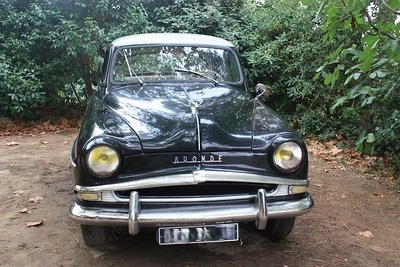
Endurance figures reinforced that reputation. On March 17, 1953, the hundred-thousandth Aronde left the Nanterre lines. A few months later, a production car selected at random and monitored by Automobile Club de France officials began a record attempt at Montlhéry. From August 1 to September 18, 1953, it covered more than 116,000 km at an average of 104.07 km/h and set 37 international records in the 1,500 cc class. The achievement later fed famous advertising, but more importantly it fixed the Aronde as a serious and durable car.
The range then evolved in stages. In 1955 the different Aronde engines moved to 1,290 cc with the Flash units. In 1958 the P 60 gave the body a more visible renewal. That pattern says a lot about Simca's method: keep a successful car alive by modernizing it at the right moments rather than breaking with it too abruptly. The Aronde remained the real foundation of the marque's rise.
Poissy, Vedette, Ariane and Chrysler's arrival
The summer of 1954 opened a new chapter. Simca bought Ford SAF and its plant at Poissy. The operation changed the company's scale, but it also made the range more complex. Simca took over the Vedette and its V8 derivatives from Ford France. The line then included the Régence, Versailles, Trianon and the Comète coupé from Ford stocks, followed by the Marly estate in 1955. For Pigozzi the attraction was obvious: a large industrial site and access to a more upmarket segment where Simca had not really been present.
The integration remained ambiguous. The Vedettes kept a strong Ford character, and their 2,351 cc V8 did not perfectly match the direction of the French market. The Suez episode and fuel sensitivity made large cars harder to sell. Simca responded in 1957 with the Ariane, combining a Vedette chassis with the Aronde's four-cylinder engine. The formula says a great deal about the period: Poissy had to be used profitably, but the product also had to be pulled back toward acceptable running costs and taxation.
In the spring of 1958 Simca also bought Talbot-Lago. The same year Chrysler first acquired Ford's 15 percent shareholding and then another 10 percent of the capital. The company did not become a Chrysler business overnight, but the move was under way. By the end of 1962 the American stake had reached 63 percent. Simca was still producing very French cars in their market role, but its industrial future was already shifting.
The 1960s, from the Simca 1000 to the 1100
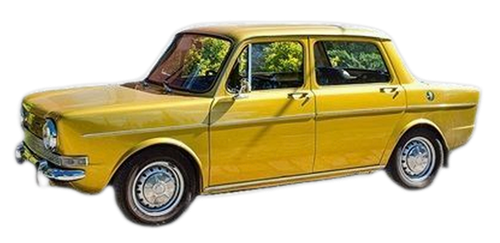
The Simca 1000, introduced in the autumn of 1961, remains one of the best-known cars ever to wear the badge. It came from a small four-door project begun at Fiat and completed by Simca. Its specification is revealing: 3.80 m long, 1.49 m wide, seating for five, unitary construction, four-wheel independent suspension, a 944 cc four-cylinder engine producing 40 DIN hp, mounted behind the rear axle, and a front luggage compartment. The appeal was not only visual. The car answered a real need for a simple family compact that could be built in large numbers.
In the spring of 1963 Simca also launched the 1300 and 1500 and began production of the Bertone coupé derivative of the 1000. But this was also the moment when management changed. In May 1963 Henri Théodore Pigozzi resigned as chairman and Georges Héreil took over. The shift mattered. The brand remained productive and inventive, but it was no longer being led by the man who had shaped it from the SAFAF years and the beginnings at Nanterre.
In 1967 Simca revealed the 1100. Any serious history of the brand has to stop there. Simca offered a front-wheel-drive car with a transverse engine and a hatchback body that still looked unusual at the time. The 1100 sat between the small 1000 and the more conventional 1301-1501. Above all, it showed that Simca could still read everyday needs with accuracy: versatility, practicality, manageable size and sound road manners. In the Simca story it is one of the clearest moments when engineering and actual use come together.
From Chrysler France to Talbot, and what remains of Simca
The summer of 1970 marked the end of the Simca name as a corporate identity: the company became Chrysler France. The Simca badge remained visible on several cars for a while, but the wider identity had changed. The decade was not only one of decline, however. In 1975 the Chrysler-Simca 1307 and 1308 were named European Car of the Year for 1976. In 1977 the Chrysler-Simca Horizon won the 1978 title in turn. The Simca line was still producing significant cars even after the industrial framework had already shifted.
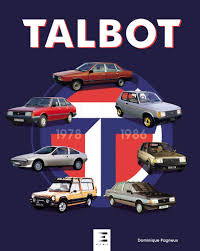
In August 1978 Chrysler sold its European operations to Peugeot SA. In July 1980 Chrysler France became Société des Automobiles Talbot. Production stops then followed one after another: the 1100 saloon and estate ended in 1981, then came the end of the Tagora, the Matra-Talbot Murena and Rancho, and finally the Samba in 1986. By then Poissy was mainly building Peugeots. For Simca, the real disappearance had already happened: the name no longer carried the company.




What remains of Simca today is both a set of cars and an industrial trajectory. The marque began as a French arm of Fiat, grew through Nanterre and then Poissy, found its strongest voice with the Aronde and later produced highly accurate everyday cars such as the 1000 and the 1100 before being dissolved into larger groups. For many enthusiasts, Simca does not point to one single silhouette. It refers to a whole section of post-war French motoring.
Chronological and technical markers
- 1934: Simca created in order to build in France Fiat cars that had become more expensive to import
- 1935: Donnet and the Nanterre factory taken over; Henri Théodore Pigozzi becomes managing director
- 1936: Simca 5, derived from the Fiat 500 Topolino, 570 cc, 13 hp
- 1937: Simca 8, derived from the Fiat 508C, 1,089.5 cc, 32 hp
- 1951: launch of the Simca 9 Aronde, 1,221 cc engine
- 1953: more than 116,000 km covered at Montlhéry by a production Aronde at an average 104.07 km/h
- 1954: takeover of Ford SAF and the Poissy plant
- 1957: Ariane, with Vedette chassis and Aronde four-cylinder engine
- 1958: Chrysler enters the capital; launch of the Aronde P 60
- 1961: Simca 1000, rear-mounted 944 cc engine
- 1963: Chrysler takes control; Pigozzi leaves; 1300 and 1500 launched
- 1967: Simca 1100, front-wheel drive, transverse engine and hatchback body
- 1970: Simca becomes Chrysler France
- 1978: sale to Peugeot SA
- 1980: Chrysler France becomes Société des Automobiles Talbot
Simca did not exist for a full century under its own name, but it left a very clear mark. The marque tells the story of a move from licensed manufacture to relative independence, then to absorption inside larger groups. Above all, it left cars that were genuinely used, driven, worked with and woven into everyday life. That is probably why the name still feels so present.
This Simca history also comes into focus through the Simca Aronde story, along with the Simca 9 Aronde.
Sources
- Club Simca France, History of the marque
- Club Simca France, Simca 8
- Club Simca France, Simca 9, Aronde and P 60
- CAAPY, Simca cars
- Club Simca France, Simca 1000
- Club Simca France, Simca 1100
- Larousse, Simca
- Historic illustrations already present in the site's assets.
Chronicle through time
Henri Pigozzi, Fiat and the birth of Simca in France
Simca did not begin from a blank page. The marque was built around Henri Pigozzi to manufacture in France Fiat cars that had become too expensive to import.
