




Panhard Dyna Z : une berline française audacieuse, légère et en avance sur son temps
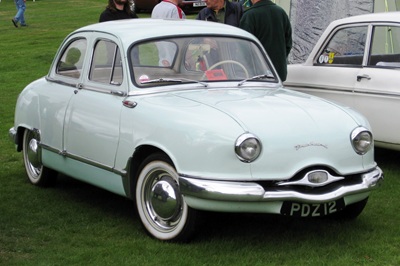
Dans l’automobile française de l’après-guerre, la Panhard Dyna Z occupe une place à part. Elle ne cherche pas à séduire par la puissance brute ni par une présentation ostentatoire, mais par une idée beaucoup plus moderne : obtenir de vraies performances grâce à la légèreté, à l’aérodynamique et à une mécanique intelligemment conçue. Avec sa silhouette profilée, son bicylindre à plat refroidi par air, sa traction avant et ses premières carrosseries allégées, la Dyna Z incarne une automobile d’ingénieur, cohérente, inventive et profondément originale.
Résumé : produite de 1954 à 1959, la Panhard Dyna Z est une berline française connue pour sa carrosserie d’abord en Duralinox, son moteur bicylindre de 851 cm³, sa traction avant et son excellent rendement. Elle donnera naissance à plusieurs versions, dont la Z1, la Z11 et la Z12, tout en conservant la même philosophie : faire mieux avec moins.
Un design inspiré par la vitesse et par l’efficacité
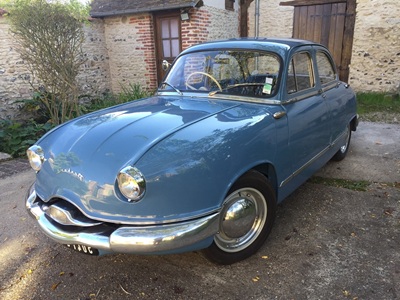
La première chose qui distingue la Dyna Z, c’est sa silhouette. Dessinée par Louis Bionier, elle adopte une ligne très fluide, souvent rapprochée d’une forme en goutte d’eau. Ce dessin n’a rien d’un caprice stylistique. Il répond à une recherche précise : améliorer la pénétration dans l’air afin de tirer le meilleur parti d’un moteur de faible cylindrée. À une époque où beaucoup de berlines restent encore assez massives dans leur allure, la Dyna Z donne déjà l’impression d’appartenir à une génération plus moderne.
Cette carrosserie aérodynamique s’accorde avec la philosophie générale du modèle. Chez Panhard, l’objectif est clair : réduire le poids pour améliorer les accélérations, la consommation, le freinage et le comportement routier. Les premiers exemplaires font largement appel au Duralinox, un alliage léger à base d’aluminium, ce qui permet d’obtenir une berline très légère pour sa taille. Le coût de cette solution devenant difficile à absorber, la marque évolue ensuite vers des carrosseries mixtes, puis tout acier, sans abandonner pour autant son obsession du rendement.
Une mécanique aussi originale que son style
Sous le capot, la Dyna Z confirme immédiatement son caractère à part. Son moteur est un bicylindre opposé à plat, refroidi par air, d’une cylindrée de 851 cm³. Cette architecture, rare dans l’automobile française de grande série, présente plusieurs avantages : un ensemble compact, léger, bas, et relativement simple dans ses principes de refroidissement. Mais surtout, elle donne à la voiture une personnalité mécanique unique, reconnaissable à sa sonorité très particulière.
La Dyna Z ne repose pas uniquement sur l’originalité de son moteur. Elle adopte également la traction avant, encore peu courante à cette époque dans la production française. Cette solution améliore la motricité, libère de l’espace dans l’habitacle et participe à l’équilibre général du véhicule. Associée à une suspension souple et à une masse contenue, elle donne naissance à une voiture agréable à conduire, confortable et étonnamment moderne dans ses réactions.
Un symbole d’audace technique à la française
Produite de 1954 à 1959, la Panhard Dyna Z a durablement marqué son époque. Elle séduit autant par son dessin, avec son avant expressif et sa face souriante, que par ce qu’elle représente sur le plan technique. Elle montre qu’un constructeur français peut proposer une automobile familiale profondément innovante sans disposer de gros moteurs ni de moyens industriels comparables aux grands groupes.
Ce fameux « sourire » de la Dyna Z, souvent évoqué par les amateurs, résume assez bien son identité. La voiture paraît sympathique, presque légère dans son expression, mais elle cache derrière cette apparente douceur un réel niveau d’audace. La Dyna Z n’est pas seulement élégante : elle est l’expression d’une conception automobile raffinée, pensée avec méthode.
Panhard Dyna Z1 (1954–1956) : la version la plus pure du concept
La Dyna Z1 représente la phase la plus emblématique de la Dyna Z lorsqu’on s’intéresse à sa philosophie originelle. Présentée en 1953 puis diffusée à partir de 1954, elle se distingue par l’emploi massif du Duralinox, qui permet de maintenir le poids sous des valeurs très basses pour une berline de cette taille. Dans le contexte de l’époque, cet allègement constitue un avantage majeur.
Une voiture légère, élégante et coûteuse à produire
Avec sa carrosserie en alliage léger, la Z1 donne une impression de finesse que l’on perçoit immédiatement à la conduite. Son poids contenu améliore tout : les performances, la vivacité, la consommation et même l’agrément général. Mais cette solution idéale sur le plan technique pèse lourd sur le coût de fabrication. C’est l’une des raisons pour lesquelles Panhard fait progressivement évoluer la structure vers des solutions mixtes, puis vers l’acier.
La transition se fait par étapes. Soubassement, toit, tablier avant et plancher adoptent l’acier, tandis que certains ouvrants restent inchangés. Cette évolution modifie le caractère du modèle, mais permet à la marque de poursuivre la carrière de la Dyna Z dans des conditions industrielles plus réalistes.
Des vitesses… troublantes pour l’époque
Le moteur de 851 cm³, donné dans les versions standard pour environ 42 ch, surprend moins par sa fiche brute que par la manière dont il entraîne l’auto. Le levier de vitesses au volant, la commande particulière de la marche arrière, les passages de rapports qui demandent un certain doigté et la nécessité d’accompagner correctement la boîte font partie intégrante de l’expérience. La Dyna Z n’est pas une voiture brutale : c’est une mécanique qui se conduit avec attention et intelligence.
En usage réel, les 100 km/h sont atteints sans difficulté particulière. La voiture bénéficie pour cela non seulement de sa légèreté, mais aussi d’un excellent coefficient de pénétration dans l’air pour l’époque. C’est précisément ce mélange entre faible masse, aérodynamique soignée et mécanique volontaire qui fait toute son originalité.
La clameur d’un petit moteur très vivant
Le démarrage, la sonorité et les réactions du bicylindre font immédiatement comprendre que la Dyna Z n’est pas une berline ordinaire. La visibilité est bonne, la direction légère, la conduite assez naturelle une fois la logique de la voiture comprise. Le moteur se montre souple, mais aussi sonore à vitesse soutenue. Cela fait partie de son identité : la Dyna Z parle à son conducteur, elle ne se contente pas de l’emmener d’un point à un autre.
Cette personnalité explique aussi pourquoi la voiture reste si attachante aujourd’hui. On ne la choisit pas seulement pour son style, mais pour le type d’expérience qu’elle propose : une automobile techniquement différente, qui récompense la douceur et la compréhension mécanique.
Gamme Panhard Dyna Z (1954–1959)
Principales versions et finitions
- Z1 (1954–1956) , Berline Luxe et Luxe Spécial ; d’abord tout Duralinox, puis caisse mixte alu/acier.
- Z5 (1956) , Berline Luxe / Luxe Taxi ; moteur revu, consommation améliorée, feux arrière simplifiés.
- Z6 (1956) , Berline Luxe Spécial ; carrosserie mixte alu/acier.
- Z11 (1956–1959) , Berline Luxe / Luxe Taxi ; tout acier, gros feux arrière, amortisseurs hydrauliques.
- Z12 (1956–1958) , Berlines Luxe Spécial, Grand Luxe, Grand Standing.
- Z15 (1957–1958) , Cabriolet Grand Standing.
- Z16 (1958–1959) , Berlines Grand Luxe / Grand Standing ; évolutions de train roulant et option moteur « Tigre ».
- Z17 (1958–1960) , Cabriolet Grand Standing.
- Z18 (1958–1959) , Berline Luxe Spécial d’écoulement de pièces.
- W2 / D-65 utilitaires (1958–1959) , Camionnette bâchée et pick-up.
Repères rapides
- Production totale Dyna Z : environ 139 600 exemplaires avant l’arrivée de la PL 17.
- Matériaux de caisse : tout alu au lancement, puis mixte, puis tout acier selon les versions et millésimes.
Dyna Z , Données techniques (1954–1959)
Moteur
Caractéristique Donnée Architecture Bicylindre opposé à plat (flat-twin), refroidi par air Cylindrée 851 cm³ Alésage × course 85 × 75 mm Taux de compression Environ 7,2 : 1 Puissance 42 ch sur versions standard, jusqu’à 50 ch avec moteur « Tigre » Couple indicatif Environ 69 N·m selon version Alimentation Carburateur Zenith selon années et finitionsTransmission et châssis
Organe Donnée Disposition Moteur avant, traction avant Boîte Manuelle 4 rapports, levier au volant Direction Crémaillère Suspension avant Roues indépendantes, lames transversales superposées, amortisseurs à bras Suspension arrière Roues indépendantes, barres de torsion, amortisseurs à bras Freins Tambours hydrauliques aux quatre rouesDimensions et masses
Élément Donnée Empattement 2 570 mm Longueur Environ 4 570 à 4 580 mm Largeur 1 668 mm Hauteur Environ 1 420 à 1 430 mm Garde au sol Environ 160 mm Poids à vide Environ 710 à 875 kg selon millésime et carrosserie Cx Environ 0,26 pour la carrosserie alu de 1954Capacités et performances
Élément Donnée Réservoir Environ 40 L Coffre Environ 254 L Vitesse maximale Environ 125 à 130 km/h en 42 ch Consommation Environ 7 à 8,5 L/100 km selon usage et versionRemarque : le matériau de caisse évolue au fil de la carrière du modèle : Duralinox au lancement, caisse mixte en 1956, puis tout acier sur les versions ultérieures.
Conclusion
La Panhard Dyna Z demeure une automobile majeure pour qui s’intéresse à l’histoire technique de la voiture française. Elle ne se contente pas d’être originale : elle montre une autre manière de concevoir une berline familiale, en donnant la priorité à la légèreté, à l’intelligence mécanique et à l’efficacité aérodynamique. Aujourd’hui encore, elle reste un modèle profondément attachant, autant pour son style que pour la cohérence de son projet.
Pour mieux comprendre la Dyna Z, vous pouvez aussi découvrir notre Dyna Z12 dans le golfe de Saint-Tropez, ainsi que la Dyna de chez Panhard.
Sources
Sources documentaires
- Panhard Dyna Z , historique général, production, versions et évolution du modèle
- Panhard Dyna Z , synthèse historique et technique
- Automobile Catalog , fiches techniques et déclinaisons de la gamme Panhard Dyna Z
- Panhard Belgique , caractéristiques techniques, versions et repères comparatifs
- News d’Anciennes , contexte historique et évolution de la Dyna Z
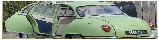
- Photo d’introduction : Panhard Dyna Z 851 cm³, millésime 1958
