





Panhard Dyna Z12 : histoire, caractéristiques techniques et intérêt en collection
 \n
\nLa Panhard Dyna Z12 est l’une des versions les plus intéressantes de la famille Dyna Z. Produite entre août 1956 et octobre 1958, elle correspond à une phase importante de l’évolution du modèle, lorsque Panhard cherche à conserver l’esprit moderne, léger et aérodynamique de la Dyna Z tout en améliorant la présentation et le confort. La Z12 se distingue notamment par ses finitions Luxe Spécial, puis Grand Luxe et Grand Standing, plus valorisantes que la simple version Luxe.
À travers elle, on retrouve tout ce qui fait le charme de Panhard dans les années 1950 : une conception très en avance, une recherche poussée d’allègement, une traction avant rare pour l’époque, un bicylindre à plat refroidi par air et une carrosserie étudiée avec un soin particulier sur le plan aérodynamique. La Dyna Z12 n’est donc pas seulement une berline populaire d’après-guerre : c’est une voiture profondément originale, aujourd’hui très attachante pour les amateurs d’auto rétro françaises.
En bref
- Modèle : Panhard Dyna Z12
- Période de production : août 1956 à octobre 1958
- Type : berline 4 portes, 6 places
- Architecture : moteur avant, traction avant
- Moteur : bicylindre à plat refroidi par air, 851 cm³
- Puissance : 42 ch selon les versions Z12 d’origine
- Boîte : manuelle 4 rapports
- Finitions : Luxe Spécial, Grand Luxe, Grand Standing
- Particularités : aérodynamique poussée, plancher plat, grande habitabilité, technique très innovante
- Intérêt collection : forte personnalité, technologie originale, cote encore raisonnable
Présentation générale
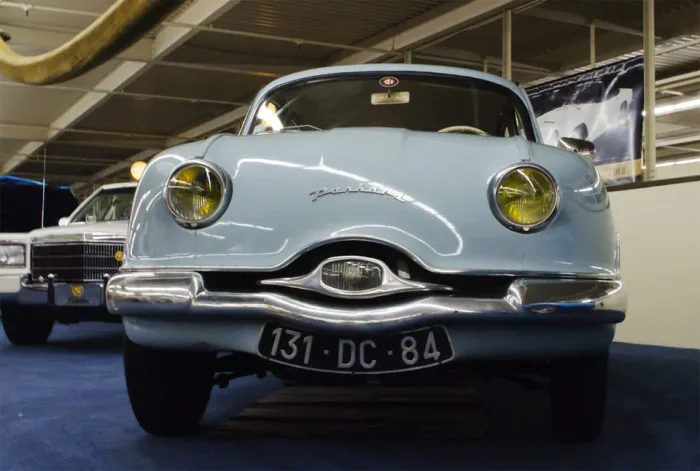
La Dyna Z12 appartient à la seconde grande phase de la carrière de la Dyna Z. Le modèle initial, lancé en 1954, avait marqué les esprits par sa modernité exceptionnelle. Panhard proposait alors une voiture spacieuse, légère, sobre et rapide pour sa cylindrée. La Z12 reprend cette base remarquable, mais dans une définition plus bourgeoise et plus présentable, destinée à séduire une clientèle recherchant davantage de confort et de standing.
Dans la gamme, la Z12 se place au-dessus de la Z11 plus simple. Elle bénéficie d’une présentation plus soignée, de détails extérieurs plus élégants et d’un niveau d’équipement supérieur. Selon les années, elle prend la forme d’une Luxe Spécial, puis d’une Grand Luxe, avec en haut de gamme l’option Grand Standing. Cette dernière ajoute notamment plusieurs raffinements esthétiques et, sur les derniers millésimes, une présentation bicolore particulièrement séduisante.
Contexte historique
Après la guerre, Panhard cherche à remplacer la Dyna X par un modèle plus spacieux, plus moderne et plus rentable. Le projet s’inscrit dans une logique de voiture française innovante, légère et économique, capable d’offrir de vraies performances avec une petite cylindrée. La Dyna Z est présentée à la presse le 17 juin 1953 puis commercialisée à partir de 1954. Elle sera produite jusqu’en 1959, avant d’évoluer vers la PL 17.
Le problème principal rencontré par Panhard tient au coût de fabrication. Les premières Dyna Z utilisent largement le Duralinox, un alliage d’aluminium choisi pour la légèreté. Mais la production revient trop cher, notamment à cause des pertes de matière lors de l’emboutissage. La marque passe alors progressivement à une carrosserie en acier. Ce changement augmente nettement le poids, ce qui modifie le comportement et enlève une partie du tempérament très vif des premières versions. La Z12 appartient justement à cette période de transition aboutie, où la recherche de standing et la rationalisation industrielle prennent davantage d’importance.
Caractéristiques techniques
- Type : berline 4 portes
- Période : août 1956 – octobre 1958
- Moteur : bicylindre à plat 4 temps, refroidi par air
- Cylindrée : 851 cm³
- Alésage x course : 85 x 75 mm
- Puissance : 42 ch à 5 300 tr/min
- Couple : environ 6,5 mkg à 3 500 tr/min
- Transmission : traction avant
- Boîte de vitesses : manuelle 4 rapports
- Vitesse maximale : environ 130 km/h
- Consommation : environ 6 l/100 km
- Empattement : 2 570 mm
- Longueur : environ 4 580 mm selon fiche Z12
- Largeur : environ 1 660 mm
- Hauteur : environ 1 550 mm selon fiche Z12
- Poids : variable selon millésime et finition, nettement supérieur aux premières Dyna tout aluminium
Les données varient légèrement selon le millésime, la finition et les sources de mesure, mais la Z12 conserve l’essentiel de la philosophie Panhard : un petit moteur très travaillé, une bonne sobriété, une vitesse honorable et une voiture familiale étonnamment spacieuse pour sa cylindrée.
Technique et conception
Ce qui rend la Dyna Z12 passionnante, c’est avant tout sa conception. Panhard ne suit pas les recettes les plus classiques du milieu des années 1950. La voiture adopte une traction avant, un bicylindre à plat refroidi par air, une structure légère et une carrosserie très profilée. L’ensemble vise un objectif clair : obtenir une auto habitable, économique et performante sans augmenter inutilement la cylindrée ni le poids.
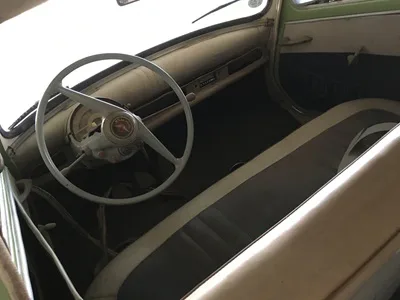
La structure modulaire de la Dyna Z est également très originale. La carrosserie n’est pas pensée comme un simple habillage traditionnel, mais comme un ensemble intégré autour d’une plateforme et de traverses tubulaires. Le plancher est plat, l’habitacle est vaste, la visibilité est excellente et l’espace à bord surprend encore aujourd’hui. À cela s’ajoute un véritable travail d’aérodynamique, avec une ligne arrondie, un pare-brise courbe et une silhouette étudiée pour limiter la traînée. Certaines sources attribuent à la Dyna Z un coefficient de pénétration dans l’air exceptionnel pour son époque.
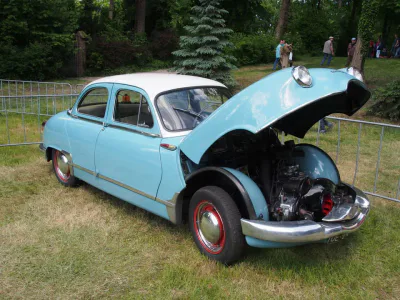
La Z12 bénéficie aussi des évolutions mécaniques de la gamme. Le moteur M5 équipe les versions de cette période et, à partir du millésime 1958, certaines Z12 reçoivent le M5 Aérodyne, avec turbine et carénage de refroidissement amélioré. Le gain n’est pas seulement technique : le fonctionnement devient aussi plus discret, ce qui améliore l’agrément d’usage.
Versions et évolutions
La Z12 est produite entre août 1956 et octobre 1958. Elle apparaît d’abord comme une Luxe Spécial, puis la présentation évolue et laisse place à la Grand Luxe. Au sommet, la Grand Standing apporte une finition plus riche. On y trouve notamment des éléments d’aluminium décoratif, des pneus à flancs blancs sur certaines configurations et une présentation extérieure plus soignée. Sur les derniers millésimes, la peinture bicolore renforce encore cette image plus chic.
La Z12 ne doit pas être confondue avec la Z11, plus simple, ni avec la Z16, qui marque ensuite l’arrivée de versions plus performantes et, plus tard, du moteur Tigre. La Z12 représente donc un moment charnière : celui où la Dyna Z devient moins radicalement légère qu’à ses débuts, mais plus valorisante dans sa présentation. C’est précisément ce mélange entre sophistication technique et charme bourgeois qui explique son intérêt actuel.
Points forts et points faibles
Points forts
- Conception très avancée pour les années 1950
- Excellente habitabilité avec six places et plancher plat
- Style immédiatement reconnaissable
- Aérodynamique remarquable
- Faible consommation pour une berline familiale
- Technique Panhard originale et passionnante pour les collectionneurs
- Versions Grand Luxe et Grand Standing particulièrement séduisantes
Points faibles
- Fiabilité et mise au point parfois inégales selon l’état de l’auto
- Bruit mécanique et aérodynamique notable sur certaines versions
- Voiture techniquement atypique, demandant un minimum de connaissances spécifiques
- Comportement moins vif que les premières Dyna tout aluminium à cause de la prise de poids
- Pièces et restauration pouvant demander un réseau de passionnés
La Dyna Z12 est donc une excellente voiture de collection pour qui cherche autre chose qu’une ancienne banale. En revanche, elle se comprend mieux lorsqu’on accepte sa logique Panhard : une voiture ingénieuse, légère dans l’esprit, mais qui demande d’être connue et entretenue avec méthode.
Points de vigilance
Sur une Dyna Z12, il faut d’abord vérifier précisément la version, le millésime et la correspondance du numéro de série. Les appellations commerciales, les évolutions de finition et les changements techniques au fil des années rendent l’identification importante, surtout si l’on veut savoir si l’on possède une Luxe Spécial, une Grand Luxe ou une Grand Standing.
Il faut ensuite surveiller la carrosserie, les assemblages, la cohérence des éléments de finition, l’état du moteur bicylindre, le système de refroidissement, la boîte de vitesses et les trains roulants. Comme souvent sur les autos françaises des années 1950, la corrosion, les réparations anciennes ou les mélanges de pièces entre millésimes peuvent compliquer l’authenticité. Une voiture très belle visuellement n’est pas toujours la plus correcte techniquement. L’idéal reste donc de contrôler l’auto avec de la documentation d’époque ou l’aide d’un passionné de la marque.
Intérêt aujourd’hui
Aujourd’hui, la Panhard Dyna Z12 a un vrai intérêt patrimonial. Elle représente une vision française très ambitieuse de l’automobile d’après-guerre, avec une audace technique que beaucoup de concurrentes n’avaient pas. Elle plaît à la fois aux amateurs de Panhard, aux passionnés de voitures populaires haut de gamme et à ceux qui recherchent une auto différente des productions plus courantes comme la Dauphine, la 203 ou l’Aronde.
Son autre atout est qu’elle conserve encore une image de connaisseur. La Dyna Z12 ne repose pas uniquement sur la nostalgie : elle impressionne encore par son architecture, son intelligence de conception et son caractère. Une belle auto bien identifiée, cohérente dans sa finition et saine sur le plan mécanique, constitue donc aujourd’hui une ancienne particulièrement intéressante à préserver.
Résumé
La Panhard Dyna Z12 est une berline française de la seconde moitié des années 1950 qui incarne parfaitement l’esprit d’innovation de la marque. Produite de 1956 à 1958, elle reprend la base technique remarquable de la Dyna Z en y ajoutant des finitions plus soignées, allant de la Luxe Spécial à la Grand Standing. Son bicylindre à plat refroidi par air, sa traction avant, sa carrosserie aérodynamique et son habitabilité exceptionnelle en font une voiture singulière dans le paysage automobile de son époque.
Plus qu’une simple ancienne, la Z12 est une voiture de culture technique. Elle demande d’être comprise, bien identifiée et entretenue avec sérieux, mais elle offre en échange une personnalité rare, une vraie valeur historique et un charme très fort. Pour un site auto-rétro, c’est clairement un modèle qui mérite une page dédiée.
Pour mieux comprendre la Dyna Z, vous pouvez aussi découvrir notre Dyna Z12 dans le golfe de Saint-Tropez, ainsi que la Panhard Dyna Z de collection.
Sources
- Club Panhard et Levassor France – Dossier de synthèse sur la Dyna Z
- Wikipédia – Panhard Dyna Z
- Wikipedia – Panhard Dyna Z
- Automobile-Catalog – 1957 Panhard Dyna Berline Grand Luxe (Z12)
- Automobile-Catalog – 1957 Panhard Dyna Berline Grand Standing (Z12)
- Automobile-Catalog – 1958 Panhard Dyna Berline Grand Luxe (Z12)
- Panhard Belgique – caractéristiques techniques de la Dyna Z
- Wikimedia Commons – File:1957 Panhard Dyna Z (France Domestic) (8391189016).jpg
- Wikimedia Commons – File:Panhard Dyna Z12 open hood, pic2.JPG
