







Walking Through Ramatuelle
Ramatuelle brings together a spiral village, a wine-growing plain, a shoreline of capes and beaches, and a cultural life that remains strong across the peninsula.
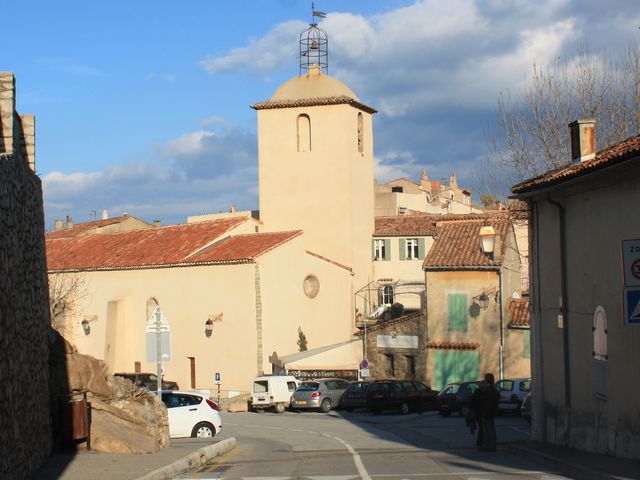
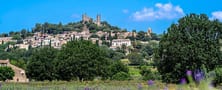
Ramatuelle stands out at once because of its elevated position. The village does not touch the sea; it overlooks it from a distance, with the farming plain below, the bay of Pampelonne and then the capes and points closing the peninsula. That distance gives the place a very particular reading, at once defensive, rural and maritime.
You therefore do not come here only for a picturesque centre. Ramatuelle matters because it gathers within one commune an old circular village, vineyards, paths, beaches, mills and a real cultural life. The centre is explored on foot, but it helps to remember that the commune runs far down towards the shore and changes landscape several times.
A spiral village, rebuilt and still inhabited
The old centre keeps a rare and very legible spiral plan. Streets turn with the relief, tightly packed inside an old enclosure that long shaped the organisation of the settlement. This form is not a decorative effect; it answers defence, wind, slope and the need to fit a settlement onto limited high ground.
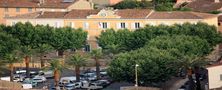
Place de l'Ormeau, Notre-Dame church leaning against the former ramparts, Rue des Sarrasins and Rue des Amoureux, the seigniorial house altered in the eighteenth century and even the staircase built by the Gustave Eiffel workshops all remind you that Ramatuelle was repeatedly altered, damaged and rebuilt, especially after the Wars of Religion. The present village keeps that layered history in its details more than in a single monument.
Cultural heritage and local life
The cultural life gives the village a density beyond its size. The open-air theatre above the centre has long hosted major events such as the Festival de Ramatuelle and Jazz à Ramatuelle. This place given to outdoor performance is not incidental: it extends a local way of inhabiting relief, viewpoints and summer evenings.
The market, small workshops, galleries, cafes on the square and the memory of submarines lost off Cap Camarat also give the village a culture that is less worldly than sometimes imagined. Ramatuelle remains a peninsula village attached to its parish, its festivals, its landscape and a wine economy that still strongly structures the surroundings.
A geography running from the village to Pampelonne
The commune does not stop at the lanes. It stretches towards the farming plain, vineyards, pine woods and the large beach of Pampelonne, then on to Cap Camarat, L'Escalet and rockier points. This range explains why Ramatuelle cannot be read as a simple hill village: it is a territory of transition between height, plain and shore.
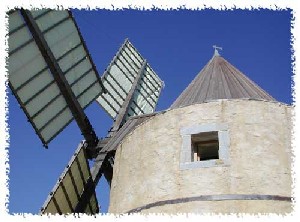
From the heights, the views over the bay of Pampelonne make that articulation clear. The Paillas mill, country paths and peninsula roads all offer a broader reading in which the village appears as a point of watch and connection rather than an isolated centre.
Geology, botany and cultivated landscapes
The relief here rests on the crystalline terrains of the Massif des Maures, with dry slopes, small terraces, stone walls and often lean soils. Lower down, the broad sandy opening of Pampelonne changes that mineral feeling quite clearly. Ramatuelle therefore lives on a constant contrast between rocky height, cultivated plain and a softer coastal strip.
The vegetation follows that diversity. You move from vineyards to fig trees, from olive trees to umbrella pines, from scrubland to more sheltered gardens inside the village. Rockrose, dry grasses, plants adapted to wind and drought, and then coastal flora near the beaches all shape a landscape in which botany is not only background; it also explains colour, scent and the rhythm of the seasons.
How to explore it today
The most accurate approach is to start inside the village, on foot, to read the circular form, gates, squares and viewpoints. Only then does it make sense to widen out towards the Paillas mill, the wine plain, Pampelonne or Cap Camarat depending on the time available. In that order, the commune feels coherent; in reverse order, it can dissolve into traffic and summer distance.
Out of season, Ramatuelle becomes clearer still. Streets recover calm, views carry farther and the contrasts between stone, vine and sea stand out more strongly. It is often the moment when the historical, cultural and landscape depth of the place becomes easiest to understand.
After Ramatuelle, you can go down towards Saint-Tropez or back up towards Gassin to compare several hill villages of the gulf.
Sources
Chronicle through time
Ramatuelle, a spiral village: how to walk through it without rushing across
Ramatuelle is more than a pleasant viewpoint. Its interest lies in its coiled plan, stairs, small squares and the way relief governs the walk.
