









Citroën 2CV AZ (1954-1956) : le moment où la 2CV devient vraiment polyvalente
Lorsque la 2CV AZ apparaît en octobre 1954, elle ne renie pas la 2CV d’origine. Elle en garde la légèreté, la simplicité mécanique et ce sens très Citroën du service rendu plutôt que de l’effet. Mais avec son bicylindre 425 cm3 et l’embrayage centrifuge, elle donne enfin à la petite Citroën une aisance qu’on attendait sur route comme au travail.
Cette courte période 1954-1956 compte donc plus qu’il n’y paraît. C’est le moment où la 2CV cesse d’être seulement une voiture austère pour devenir une base vraiment modulable, capable d’alimenter une gamme entière, de la berline à la fourgonnette.
Repères techniques : lancement en octobre 1954, moteur bicylindre à plat de 425 cm3, environ 12 ch à 4 000 tr/min, embrayage centrifuge, boîte à 4 rapports, vitesse autour de 70 km/h et consommation voisine de 4,2 L/100 km.
D’octobre 1954 à 1956 : une 2CV moins rudimentaire
La première 2CV de série, lancée en 1949, avait été pensée comme une réponse très stricte à un besoin précis : rouler peu cher, transporter sans fragilité, passer sur des chemins imparfaits et rester compréhensible pour un propriétaire qui ne disposait pas d’un grand atelier. Ce programme avait produit une voiture étonnante, mais aussi un peu juste dès qu’il fallait quitter les usages les plus sobres. Son moteur de 375 cm3 et sa puissance modeste limitaient les reprises, la vitesse de croisière et l’agrément dès que la charge augmentait.
La 2CV AZ arrive pour corriger cela sans détruire l’économie générale du modèle. Citroën ne cherche pas à transformer la 2CV en petite berline bourgeoise. La marque lui donne simplement l’aisance qui lui manquait pour devenir une voiture plus large d’usage. Sur le papier, le changement peut paraître modeste. Dans la pratique, il suffit à faire passer la 2CV d’un outil très rustique à une voiture réellement polyvalente, utilisable aussi bien par un ménage modeste que par un artisan ou un exploitant rural.
C’est aussi pour cette raison que l’AZ compte davantage que son seul millésime. Elle ouvre la phase où la 2CV devient une plateforme. La base reste simple, mais elle peut désormais soutenir plusieurs silhouettes, plusieurs niveaux d’équipement et plusieurs usages professionnels sans perdre sa cohérence.
425 cm3 et embrayage centrifuge : le cœur du changement
Le vrai tournant se trouve sous le capot. Le bicylindre à plat refroidi par air passe à 425 cm3 et développe environ 12 chevaux à 4 000 tr/min. L’architecture reste fidèle à la logique 2CV : deux cylindres opposés horizontalement, un vilebrequin central, une distribution commandée par pignons, des soupapes en tête et des culbuteurs faciles à comprendre. On n’est pas dans la sophistication gratuite. Tout est dessiné pour rester léger, accessible et peu coûteux à maintenir.
La lubrification sous pression participe à cette impression de sérieux discret. Une pompe à huile alimente les points essentiels, pendant que le refroidissement par air épargne le poids, les durites et les risques d’un circuit liquide plus complexe. L’allumage conserve lui aussi cette franchise mécanique propre à la 2CV : allumeur mécanique à avance centrifuge, bobine 6 V et système de double étincelle, dont une étincelle perdue. Rien n’est spectaculaire, mais tout est lisible et réparable.
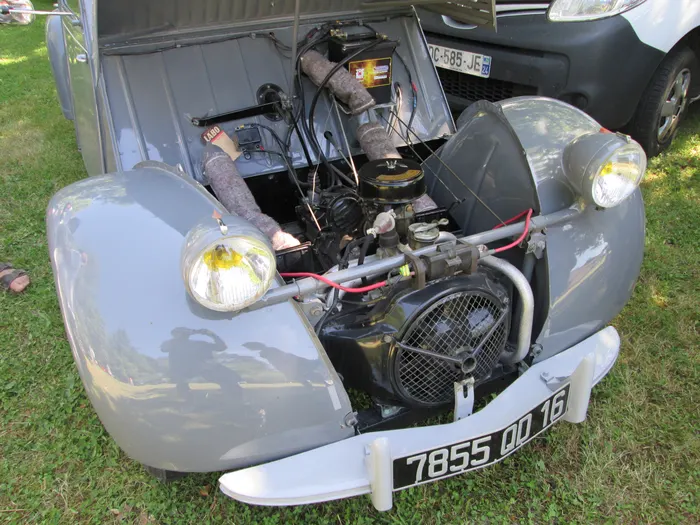
L’autre nouveauté majeure est l’embrayage centrifuge. À bas régime, il autorise un arrêt sans débrayer et facilite les démarrages. Sur une voiture destinée à des conducteurs venus d’horizons très divers, c’est bien plus qu’un gadget. Il simplifie la conduite au quotidien, réduit les maladresses et participe à cette réputation d’intelligence pratique qui colle à la 2CV.
- Moteur : bicylindre à plat, 4 temps, 425 cm3, refroidi par air.
- Puissance : environ 12 ch à 4 000 tr/min.
- Transmission : boîte à 4 rapports avant et 1 marche arrière, première non synchronisée.
- Allumage : allumeur mécanique, avance centrifuge, bobine 6 V.
Une plateforme légère, mais une suspension très travaillée
La 2CV AZ conserve ce qui faisait la force structurelle de la voiture : un châssis plateforme indépendant et une carrosserie non porteuse. Cette séparation compte beaucoup. Elle simplifie les réparations, facilite certaines transformations et maintient l’idée d’un véhicule pensé comme un ensemble d’organes simples plutôt que comme une coque difficile à reprendre. Dans la France des années 1950, c’est un avantage concret, pas un argument théorique.
La suspension reste l’un des points les plus fins de l’auto. Les quatre roues sont indépendantes, avec des bras oscillants longitudinaux, des ressorts hélicoïdaux, un dispositif anti-galop et des batteurs à inertie. Dit autrement, Citroën a consacré beaucoup d’intelligence à ce que la voiture filtre bien les chemins dégradés. C’est ce qui explique le confort étonnant de la 2CV malgré sa taille, sa puissance réduite et sa présentation très sobre. Une AZ bien réglée donne moins une impression de mollesse que de souplesse utile.
Le freinage par tambours sur les quatre roues et la direction à pignon-crémaillère restent en accord avec le poids très mesuré de l’ensemble. La voiture ne cherche pas la performance sportive. Elle vise plutôt l’équilibre entre effort réduit, entretien simple et comportement sain dans l’usage courant.
- Longueur : environ 3,78 m.
- Largeur : environ 1,48 m.
- Hauteur : environ 1,60 m.
- Empattement : environ 2,37 m.
- Poids : autour de 500 kg.
- Vitesse maximale : autour de 70 km/h.
Une carrosserie faite pour être utilisée, pas admirée de loin
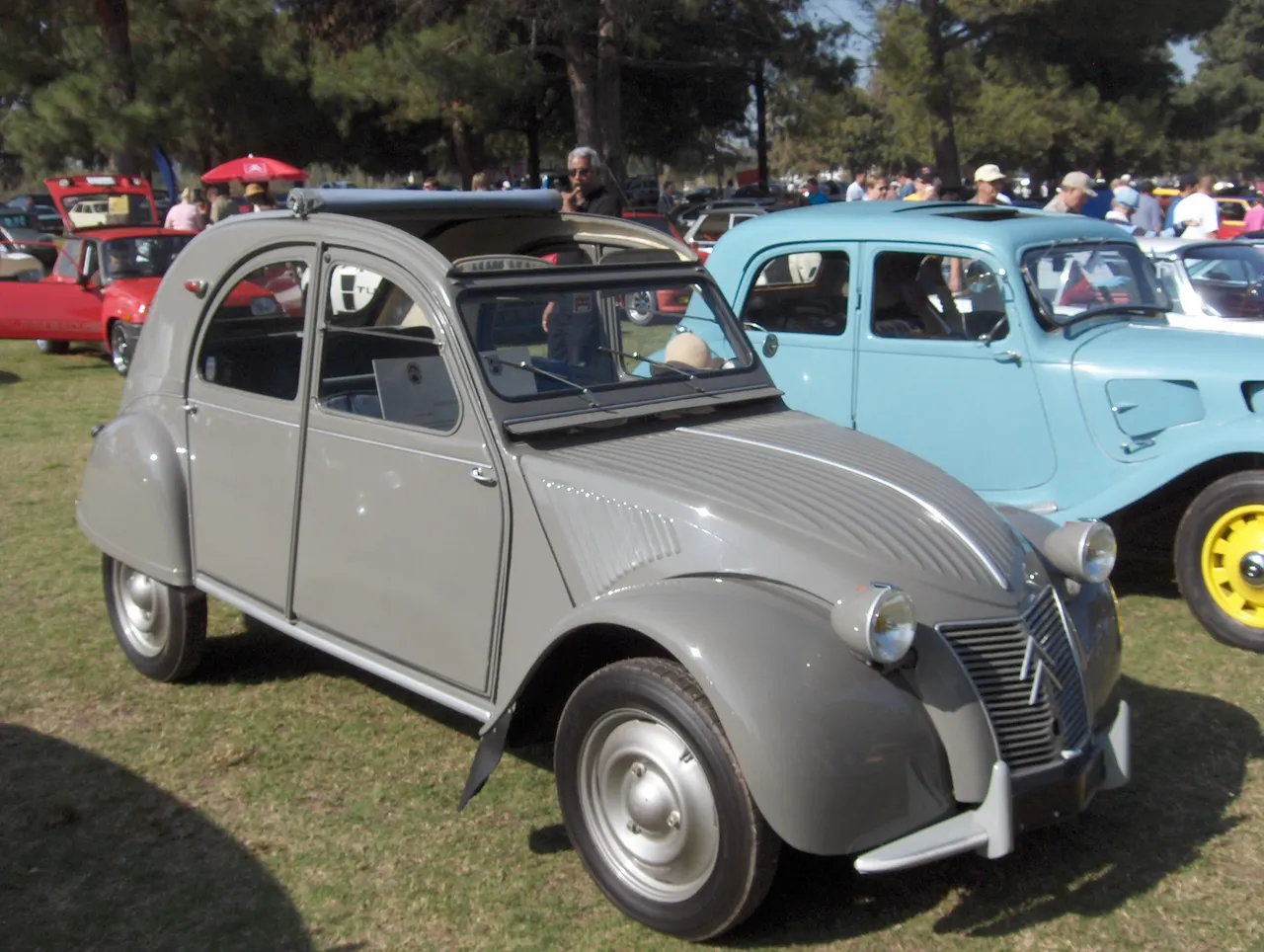
La 2CV AZ reste fidèle à une carrosserie d’une grande franchise. Tôle fine, ailes démontables, toit en toile ouvrant largement, portes avant dites suicides sur cette période, accès mécanique direct : tout concourt à réduire les coûts et à raccourcir les interventions. Ce n’est pas une voiture dessinée pour flatter une idée de prestige. C’est une voiture conçue pour être tenue en état avec des moyens raisonnables.
Cette philosophie se retrouve aussi dans l’entretien. La documentation d’époque insiste sur un principe clair : on remplace les organes plutôt qu’on ne s’engage dans des opérations lourdes d’usinage. La 2CV n’est pas pensée pour compliquer l’atelier. Elle est pensée pour limiter l’immobilisation, réduire la facture et remettre la voiture en service rapidement. C’est l’une des raisons profondes de sa diffusion massive.
Vu d’aujourd’hui, ce dépouillement peut donner l’impression d’une pauvreté voulue. Ce serait mal lire la voiture. La 2CV AZ n’est pas pauvre au sens technique. Elle est sélective. Citroën concentre l’effort là où il sert vraiment : la souplesse de suspension, la simplicité mécanique, le poids contenu, la modularité et l’accès.
AZ, AZL, AZC, AZU : une même base pour plusieurs usages
À partir de 1954, Citroën ne se contente plus d’une seule 2CV. La gamme AZ montre déjà une stratégie industrielle très claire : faire vivre une base technique commune dans plusieurs directions, sans démultiplier les coûts plus que nécessaire. C’est une logique de plateforme avant l’heure, parfaitement adaptée à un constructeur qui doit servir à la fois le particulier, l’artisan et l’utilitaire léger.
- AZ : version standard lancée en octobre 1954, moteur 425 cm3 et embrayage centrifuge.
- AZU : utilitaire fermée lancée en parallèle, pensée pour environ 250 kg de charge utile et près de 2 m3 de volume.
- AZC : version commerciale apparue en 1955, avec un aménagement plus facilement modulable pour un usage mixte.
- AZL : version plus luxueuse, diffusée entre fin 1955 et début 1956, avec quelques chromes et un équipement plus soigné.
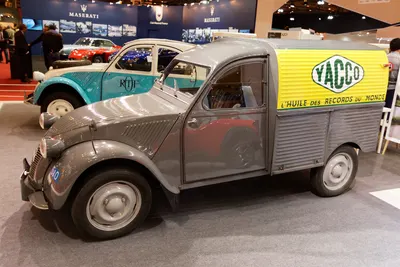
Ce que Citroën met alors en place n’est pas un simple jeu de finitions. La marque vend un concept adaptable. La même voiture peut répondre au déplacement quotidien, au petit transport professionnel, au besoin d’une fourgonnette ou à une demande de présentation un peu plus valorisante. C’est cette largeur d’usage, plus encore que la seule image sympathique de la 2CV, qui explique la profondeur du succès.
Ce que la 2CV AZ change dans l’histoire du modèle
La 2CV AZ n’est donc pas seulement une étape mécanique entre deux versions. Elle fixe un nouvel équilibre. Avec elle, la 2CV reste sobre, mais elle cesse d’être limitée à un rôle presque ascétique. Elle devient une voiture capable de mieux tenir la route ouverte, de porter davantage, de simplifier la conduite et d’alimenter une gamme cohérente.
C’est aussi ce qui rend cette version si intéressante aujourd’hui. Elle montre une Citroën qui améliore sans alourdir, qui ajoute de l’usage plutôt que du décor, et qui comprend qu’une voiture populaire peut devenir plus complète sans perdre son dessin initial. Dans l’histoire de la 2CV, l’AZ représente ce moment précis où l’ingénierie par simplification atteint sa pleine maturité.
Pour mieux comprendre la 2CV, vous pouvez aussi découvrir l'histoire de la Citroën 2CV, ainsi que la Citroën 2CV AZA.
Sources
- Citroën / Stellantis Media : Historic, Iconic, Legendary: Citroën Celebrates 75 Years of the 2CV
- Citroën : dossier officiel du centenaire
- Citroën Origins : Le Confort Citroën
- Wikimedia Commons : File:1955 Citroen 2CV.jpg
- Wikimedia Commons : File:Citroën 2 CV type AZ de 1957 - moteur.jpg
- Wikimedia Commons : File:Rétromobile 2016 - Citroën 2CV AZU - 1956 - 001.jpg
