











Se promener à Sainte-Maxime
Sainte-Maxime tient ensemble une vieille rive du golfe, une ville de promenade et un paysage de collines où la botanique mediterraneenne, jusqu'au mimosa, reste tres presente.
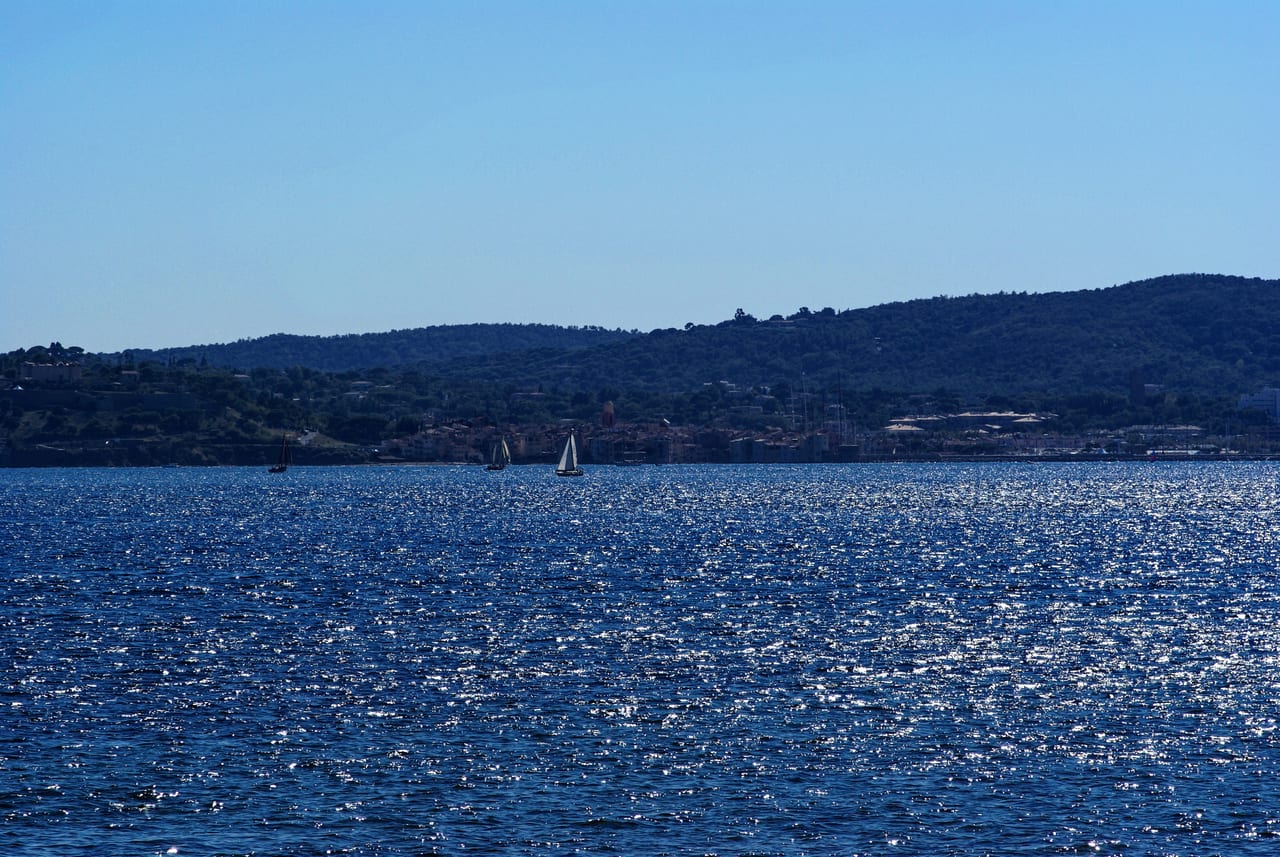
Sainte-Maxime fait face à Saint-Tropez depuis la rive nord du golfe. Cette position explique presque tout: la ville regarde la mer en permanence, mais elle ne se résume ni à son front de mer ni à ses plages urbaines. Elle garde un noyau ancien, un port, des quartiers étirés, des collines et une histoire locale plus continue qu'on ne le croit quand on n'en voit que les terrasses.
La promenade est donc double. D'un côté, il y a la baie, les quais, les plages et la lumière ouverte sur la presqu'île. De l'autre, il y a les rues plus anciennes, la Tour Carrée, les marchés, les pentes du Sémaphore et de la Nartelle, puis un paysage végétal qui rattache Sainte-Maxime à l'hiver doux du littoral varois autant qu'à l'été.
Une ville de rive avant d'être une station
Le centre ancien s'est développé autour d'un petit noyau protégé, d'une paroisse et d'un bord de mer longtemps utile à la navigation locale. On retrouve encore cette mesure dans les rues courtes qui rejoignent le port, dans les places qui gardent un rôle d'usage et dans la présence constante du rivage au bout des perspectives.
La ville s'est ensuite étirée en longeant la baie. Cette croissance n'a pas effacé sa logique d'origine: Sainte-Maxime reste une commune de rive, c'est-à-dire un lieu où l'on lit toujours l'autre côté du golfe, où les plages et les quais organisent le quotidien, mais où le vieux centre garde la fonction de repère.
La Tour Carrée et le patrimoine urbain
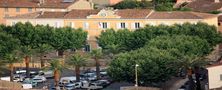
La Tour Carrée reste le bâtiment le plus parlant pour résumer cinq siècles d'histoire locale. Construite en 1520, rehaussée en 1560 puis en 1856, elle a servi de demeure seigneuriale, de tour canon destinée à protéger le golfe, de grenier, de prison, d'école, de mairie, puis de musée. Elle rappelle à elle seule que Sainte-Maxime n'est pas née d'une seule économie touristique, mais d'usages civils, militaires et administratifs successifs.
Autour d'elle, le vieux centre mêle ruelles, façades sobres, placettes, marché et parcours vers l'église ou le port. Il ne faut pas chercher ici une ville musée; il faut plutôt lire comment un bourg tourné vers la baie s'est adapté sans perdre complètement sa structure. La Maison des Traditions, les circuits de découverte et la vie culturelle contemporaine prolongent cette continuité.
Relief, géologie et paysage vegetal
Sainte-Maxime associe des secteurs très ouverts sur l'eau et des collines qui redonnent vite de l'épaisseur au paysage. Le littoral offre des anses et des plages plus ou moins longues, tandis que l'arrière immédiat remonte vers des pentes rocheuses et boisées. Cette alternance explique le contraste entre la promenade urbaine du front de mer et les parcours plus aérés vers la Nartelle ou les hauteurs.
La botanique locale fait partie de l'identité de la commune. Pins, oliviers, palmiers, tamaris et jardins méditerranéens accompagnent la ville toute l'année. De janvier à mars, le mimosa prend une place particulière dans les collines et dans l'imaginaire local. Les sols secs et bien drainés lui conviennent, et la Route du Mimosa rappelle combien cette plante venue d'Australie s'est inscrite dans le paysage hivernal de la Côte d'Azur.
Culture de promenade et vues sur le golfe
La force de Sainte-Maxime, c'est de rester une ville que l'on peut vraiment parcourir à pied. Depuis le centre, on peut tirer vers le port, longer le front de mer, rejoindre les plages, ou chercher un peu de hauteur pour regarder Saint-Tropez en face. Cette lecture par la vue est essentielle: la commune se comprend autant par ce qu'elle montre du golfe que par ce qu'elle garde en elle.
Le marché, les plages, la programmation culturelle, la mémoire des traditions locales et la vie ordinaire des quartiers donnent à la promenade une tonalité moins spectaculaire mais plus continue que sur la rive sud. Sainte-Maxime n'a pas besoin d'effet de scène. Elle tient par sa régularité, sa lumière et sa façon de faire cohabiter ville habitée et station balnéaire.
Comment la parcourir aujourd'hui
Le plus simple est de commencer dans le centre, autour de la Tour Carrée, puis de descendre vers le port avant de suivre le bord de mer. Si l'on dispose de plus de temps, il est utile d'élargir vers les plages de la Nartelle ou vers les secteurs de promenade plus végétalisés. On comprend alors que Sainte-Maxime n'est pas seulement une façade sur l'eau, mais une commune composée de plusieurs rythmes.
Hors haute saison, cette structure est beaucoup plus lisible. La baie reprend de l'ampleur, le centre respire, les parcours deviennent plus fluides et les collines retrouvent leur présence. C'est souvent le meilleur moment pour voir comment patrimoine, culture locale, géographie de rive et végétation méditerranéenne tiennent réellement ensemble.
Après Sainte-Maxime, on peut tourner le regard vers Grimaud ou revenir à la page des villages du golfe pour relier plus facilement la rive nord, la presqu’île et l’arrière-pays.
Sources
Chronique au fil du temps
Sainte-Maxime, promenade du rivage, Tour Carrée et présence du mimosa
Sainte-Maxime n’est pas seulement une station de rive. Sa promenade, la Tour Carrée, le relief végétal et la place du mimosa donnent une lecture plus dense de la commune.
