






Se promener au Rayol-Canadel-sur-Mer
Le Rayol-Canadel-sur-Mer relie naissance balneaire recente, plages, escalier monumental, memoire du Debarquement, botanique du Domaine du Rayol et pentes cristallines plongeant vers la mer.
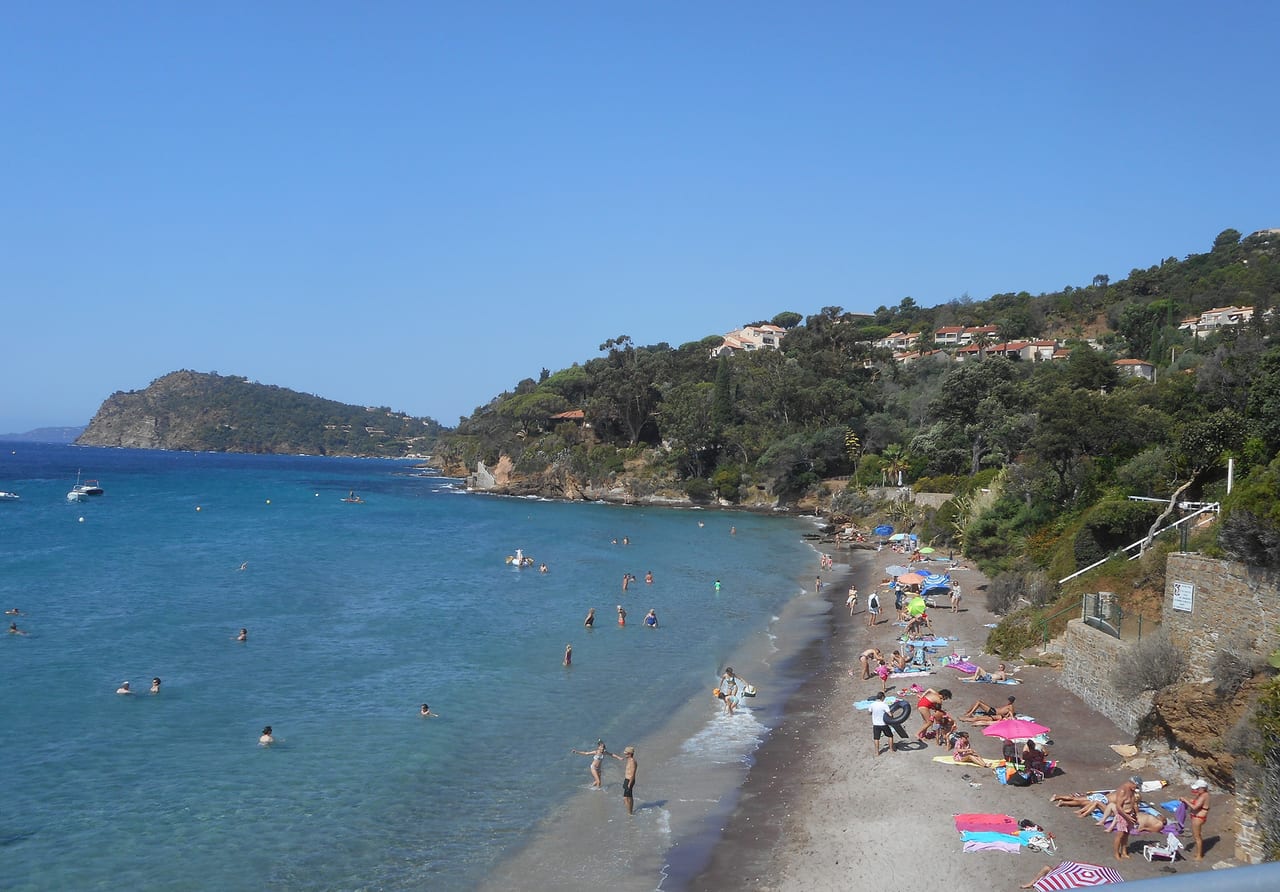
Le Rayol-Canadel-sur-Mer n'est pas un vieux village perché reconverti vers la mer. La commune est beaucoup plus récente et s'est construite au XXe siècle par agrégation de quartiers littoraux ouverts entre collines et plages. Cette naissance tardive lui donne un visage particulier dans le golfe: moins centré sur un bourg ancien que sur des accès, des jardins, des escaliers, des stations de bord de mer et une forte présence du paysage.
On lit donc ici une autre histoire du rivage. Avant le développement balnéaire, le site était presque inhabité, occupé seulement par quelques bergers et exploitants de liège. Puis le chemin de fer, les premiers hôtels, les jardins, les villas et les grands travaux d'aménagement ont dessiné un territoire nouveau, devenu commune indépendante en 1949.
Une commune nee des quartiers du littoral
Le Rayol, le Canadel et Pramousquier restent les trois repères les plus lisibles. Chacun garde sa relation propre à la plage, à la route et aux pentes. Le Canadel s'ouvre vers la D27 et le col qui rejoint La Môle; Pramousquier marque la transition vers Le Lavandou; le Rayol concentre une partie des équipements et des vues les plus célèbres.
Cette structure par quartiers explique la circulation locale. La commune ne se comprend pas comme un centre unique, mais comme un chapelet de secteurs qui descendent vers la mer. Les anciens arrêts ferroviaires, les escaliers, les routes et les jardins ont joué un rôle décisif dans cette mise en forme.
Escalier monumental, plages et memoire du Debarquement
L'escalier monumental du Rayol, avec ses 882 marches en schiste local, est l'un des signes les plus forts de la commune. Il ne sert pas seulement à descendre à la plage; il met en scène la relation entre hauteur et rivage, entre jardins et mer, entre parcours urbain et paysage littoral.
Les plages du Rayol, du Canadel et de Pramousquier structurent l'autre moitié de la visite. La stèle des commandos au-dessus du Canadel et la plage du Débarquement rappellent que le site a aussi porté une mémoire militaire précise en août 1944. Ici, le rivage reste à la fois un lieu de baignade, d'histoire et de franchissement.
Botanique, Domaine du Rayol et jardin des Mediterranees
Le Domaine du Rayol donne à la commune une portée botanique exceptionnelle. Propriété du Conservatoire du littoral et conçu comme Jardin des Méditerranées, il propose une lecture du monde végétal à partir des grands climats méditerranéens. On n'y visite pas un simple parc d'agrément, mais un lieu de transmission sur les plantes, les usages, les jardins et les paysages côtiers.
Cette dimension change la promenade dans toute la commune. Les essences plantées, les pinèdes, les jardins en pente, les secteurs plus sauvages et même les découvertes du jardin marin donnent au Rayol-Canadel-sur-Mer une identité où la botanique tient une place centrale et continue.
Geologie, rivieres courtes et vues vers Port-Cros
Le territoire s'appuie sur des pentes cristallines qui plongent rapidement vers la mer. Les sols sont souvent secs, les reliefs courts, les vallons étroits et les vues très ouvertes. Le ruisseau de Pramousquier, le col du Canadel et les différentes anses rappellent que la géographie locale reste très découpée malgré l'image de station paisible.
Face au large, les îles de Port-Cros, du Levant ou de Porquerolles prolongent cette lecture maritime. On regarde ici autant la ligne des îles que la matière du rivage. Le Rayol-Canadel-sur-Mer gagne donc à être compris comme un territoire de seuil, posé entre pentes, jardins, plages et horizon insulaire.
Comment l'aborder aujourd'hui
Le mieux est de choisir un axe simple: un quartier, une plage, un passage par le Domaine du Rayol, puis un point de vue ou l'escalier monumental. Cette progression laisse apparaître la logique par strates de la commune au lieu de la réduire à une seule carte postale littorale.
Hors été, le relief, la botanique et la mémoire du lieu ressortent beaucoup mieux. Les chemins sont plus respirables, les plages reprennent leur dessin, les vues vers les îles s'élargissent et l'on comprend plus nettement comment cette commune récente a construit une identité très singulière dans le golfe.
Après Le Rayol-Canadel-sur-Mer, on peut remonter vers La Môle pour comprendre l’arrière-pays immédiat, ou rester sur le littoral en rejoignant Cavalaire-sur-Mer.