Renault Twingo Series 1 Phase 2: the small Renault grows up
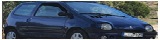
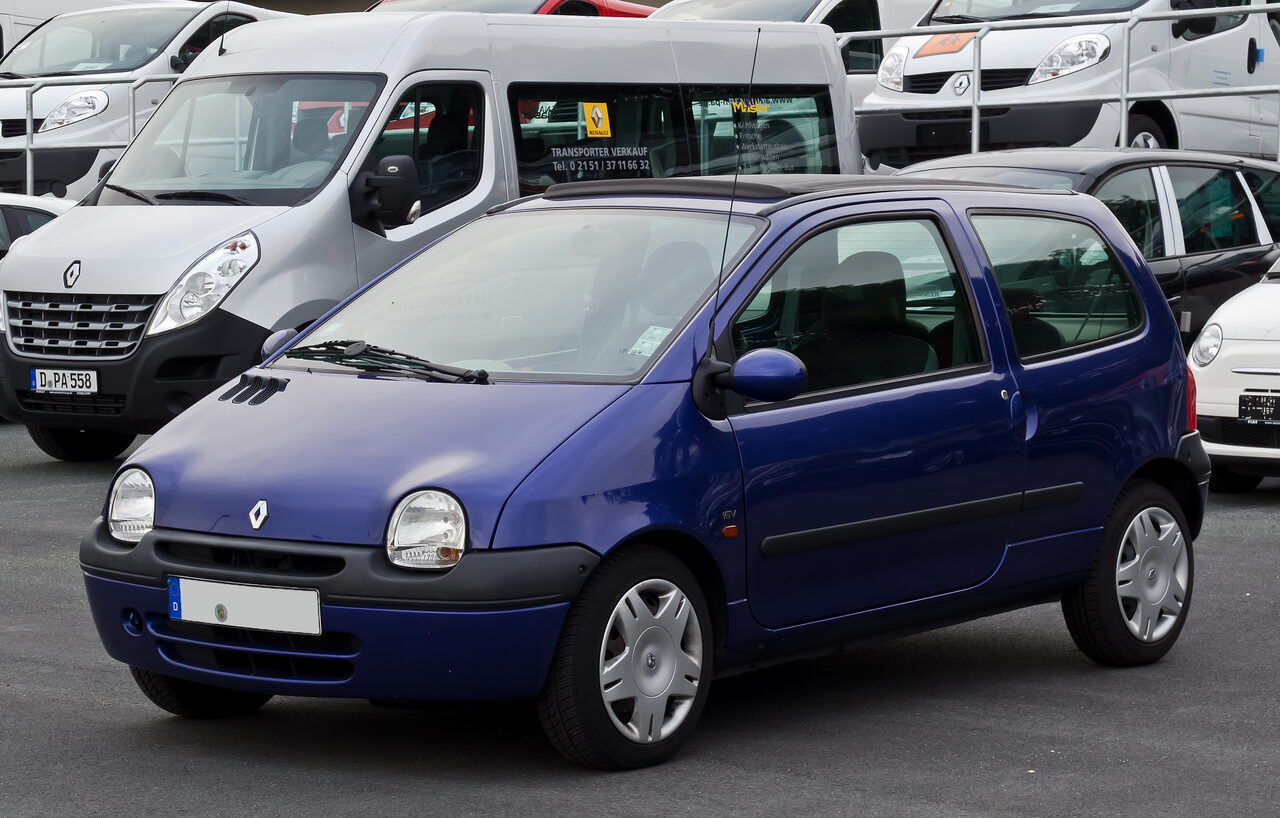
Between 1998 and 2000, the first Renault Twingo entered an important middle phase. It kept its one-box shape, sliding rear bench and instantly recognisable face, but gained revised bumpers, an updated dashboard and a more mature technical feel.
This is not the most spectacular chapter in the model's history. That is exactly why it matters: it shows how Renault developed a very original city car without diluting it.
Quick reference: Phase 2 belongs to the first-generation Twingo and broadly covers the 1998-2000 European period. It keeps the 3.43 m one-box body, front-wheel drive and modular cabin, while bringing revised bumpers, an updated dashboard and a more mature everyday feel. Mechanically, the 1.2-litre petrol engine remains central, especially the 1,149 cc D7F with around 60 hp.
1998: an update that keeps the original idea intact
When the first-generation Twingo moved into its Phase 2 period in 1998, Renault did not need to reinvent the car. The model was already known, widely seen and instantly recognisable. The task was more delicate than it looked: change enough to keep the small Renault relevant in a more demanding market, without losing the clarity that had made it so easy to understand in 1993.
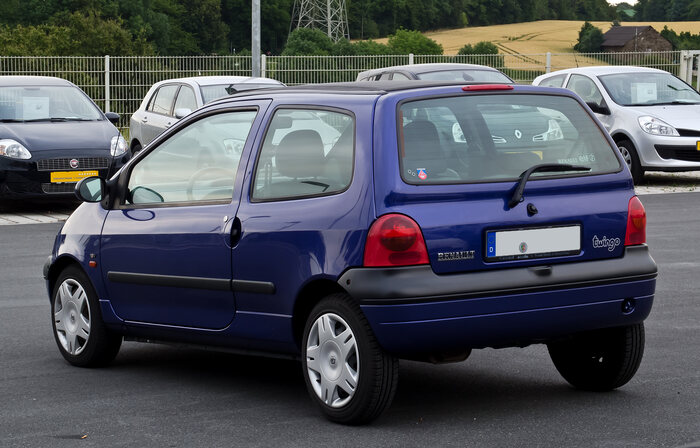
The outer shape therefore stays very close to the first Twingo. The short nose, high cabin, generous glass area and wheels pushed towards the corners all remain in place. The bumpers are smoothed and better integrated, the lighting looks cleaner, and the car feels less raw than the first model years. It does not become conventional, but it does feel more finished.
That restraint matters. A heavier facelift could have pulled the Twingo towards an ordinary small hatchback. Phase 2 instead corrects the signs of age without erasing the face. It is still the same compact one-box car, just treated with more care in the details and with a presentation better suited to the end of the 1990s.
The rear view shows the discreet Phase 2 update, with bumpers integrated more cleanly into the body.
A cabin that grows more mature without losing its flexibility
The main progress is not only outside. Inside, Phase 2 becomes more serious while keeping the same simple logic. The dashboard is redrawn, the controls feel neater and passive safety takes on a clearer place. The speedometer stays in the centre, as on the earliest Twingos, because Renault keeps one of the model's most recognisable cabin markers.
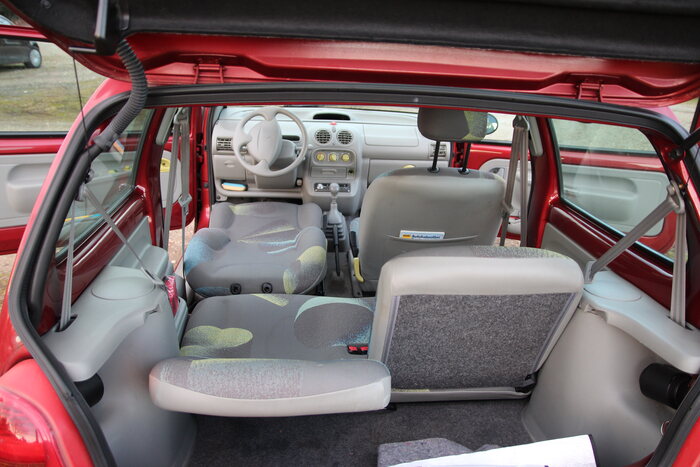
The real value of the car remains unchanged. The rear bench slides, the space can be adjusted, and the very short body still hides a cabin that is surprisingly usable. In a 3.43 m car, that intelligence of space matters more than spectacular equipment. It allows the Twingo to carry luggage, take two adults in the back, leave for a short trip or become a genuinely useful small service car.
Cabin flexibility remains one of the first Twingo’s most concrete qualities.
Phase 2 therefore adds composure to a car that was already practical. It does not try to become luxurious. It simply gives the impression that the Twingo has learned to present its strengths better: small outside, roomy inside, easy to park and less basic than its earliest years could suggest.
The D7F: a small engine that suits the car
Under the short bonnet, the important story is the gradual maturing of the mechanical package. The older 1.2-litre C3G used in the earliest cars had simplicity on its side, but it belonged to another period. With the D7F, which became central to the Twingo during the second half of the 1990s, the car received a more modern small four-cylinder engine: 1,149 cc, eight valves and around 60 hp.
Those figures do not describe a sporting car. They describe the right level of effort. Phase 2 stays light, clear and economical. The D7F suits that brief because it feels smoother, quieter and better matched to everyday use. It does not ask the Twingo to become something else. It simply gives it enough ease for city driving, ring roads and short country journeys.
That is part of its interest today. A Phase 2 Twingo is not technically intimidating. It remains simple enough to understand and maintain, but it is no longer as early and raw as the first cars. For many people drawn to small everyday classics, this is the most pleasant middle ground: still very much a Twingo, already a little better protected against the rough edges of the early series.
Why Phase 2 is a strong way to read the first Twingo today
Today this version reads as a moment of balance. Phase 1 carries the surprise of the launch. The later phases take the model well into the 2000s. Phase 2 sits between them, close enough to the original design to preserve its freshness, but developed enough to feel more reassuring in real use.
You can see it in the cars that still drive regularly. They are rarely perfect, but often honest. A well-kept Twingo from these years still shows the spirit of the first series: bright cabin, direct controls, short turning circle, low running costs and a design that remains recognisable without aggression. It reminds us that a small car does not have to feel poor when its answer is precise.
Phase 2 is therefore not a minor footnote. It is the point at which the Twingo begins to organise its own longevity. Renault corrects, calms and updates the model without overdoing it. That measure is what makes it interesting today: a small Renault that keeps its first spark, but already drives, feels and ages with more maturity.
Beaucoup de Twingo ont été réparées, repeintes ou mélangées au fil des années. Pour reconnaître une série 1 phase 2, il faut donc regarder plusieurs détails modestes plutôt que chercher un signe unique et définitif.
L’arrière aide souvent à confirmer une phase 2 plus sûrement que le souvenir d’une date.
1998-2000 : la place exacte de la phase 2
La phase 2 se situe au milieu de la carrière de la première Twingo. Elle n’invente pas une nouvelle voiture; elle corrige et calme le modèle d’origine pour le faire durer dans un marché devenu plus exigeant.
Cela explique son intérêt actuel. On y retrouve les choix des débuts, mais avec une présentation plus mûre.
Les indices extérieurs les plus sûrs
Les boucliers mieux intégrés, le dessin plus lissé et une impression générale plus propre aident à situer la phase 2. Rien n’est spectaculaire, mais l’ensemble paraît moins brut que sur les premiers millésimes.
Comme beaucoup d’exemplaires ont reçu des pièces d’autres périodes, il faut croiser plusieurs indices et non s’appuyer sur un seul élément.
Les repères d’habitacle qui évitent les confusions
À bord, la planche de bord revue et la présentation plus adulte servent souvent de meilleurs repères que l’extérieur seul. La modularité demeure, mais l’ambiance paraît plus finie.
Le bon réflexe consiste à chercher une cohérence d’ensemble. Une vraie phase 2 se lit plus comme une harmonie de détails que comme une transformation radicale.
Les Caramagnols réunissent nos pages auto-rétro, nos voitures anciennes et nos promenades dans le Golfe de Saint-Tropez. Le site relie ainsi nos modèles de collection, nos récits de route et les lieux qui les entourent.