Austin et Morris Mini : histoire, technique et héritage
Présentée le 26 août 1959 par la British Motor Corporation, la Mini apparaît d’abord sous deux noms : Austin Seven et Morris Mini-Minor. Alec Issigonis la dessine pour loger quatre personnes dans une carrosserie de 3,05 m, avec une architecture qui deviendra une référence pour la petite voiture moderne. Son histoire tient autant à cette intelligence technique qu’à sa longue carrière, des versions populaires aux Cooper de rallye, puis à la relance du nom Mini par BMW.
1959 : une réponse claire à un problème concret
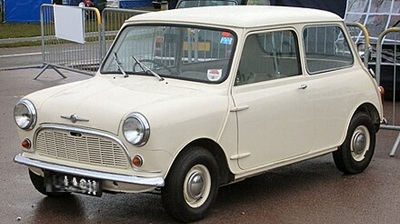
Au milieu des années 1950, la British Motor Corporation cherche une voiture capable de transporter quatre personnes, avec une consommation contenue et un encombrement très réduit. Le contexte compte : après la crise de Suez de 1956, la question de l’économie redevient centrale dans l’automobile britannique. Alec Issigonis reçoit alors une consigne simple et exigeante : concevoir une vraie petite voiture familiale, pas une microcar d’appoint. Quand elle est présentée le 26 août 1959, le public la découvre sous deux noms presque jumeaux, Austin Seven et Morris Mini-Minor.
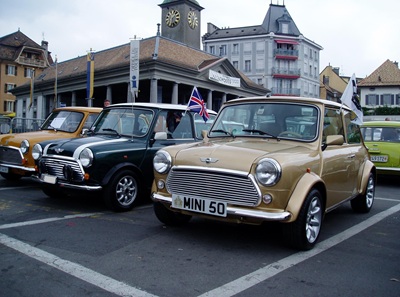
Une Mini Mk I au début des années 1960.
La fiche technique paraît modeste, mais elle résume déjà l’essentiel du projet : un quatre-cylindres de 848 cm3, 34 ch, quatre places et seulement 3,05 m de long. La Mini n’est pas pensée d’abord comme une voiture d’image. Elle est conçue pour répondre à un besoin quotidien avec une efficacité rare. C’est précisément ce qui explique qu’elle s’impose très vite bien au-delà de son segment d’origine.
Une architecture qui change la petite voiture
Ce qui fait la singularité de la Mini, ce n’est pas une seule trouvaille, mais un assemblage cohérent : moteur monté en travers à l’avant, traction avant, roues rejetées aux quatre coins, sous-châssis compacts et suspension en caoutchouc. Aujourd'hui, ces choix paraissent familiers. En 1959, leur combinaison dans une voiture aussi courte reste remarquable. Selon la documentation historique de BMW Group, près de 80 % de l’empreinte au sol servent aux passagers et à leurs bagages, ce qui dit bien l’intelligence du dessin.
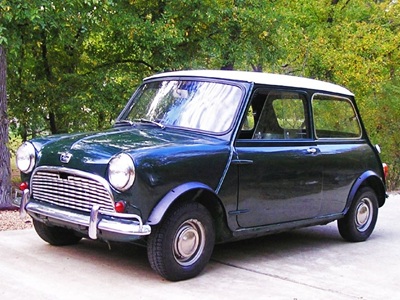
La silhouette de la Mini reste immédiatement reconnaissable.
Cette disposition change aussi la conduite. La Mini paraît vive, posée sur ses roues, facile à placer, presque plus grande qu’elle ne l’est vraiment une fois installé à bord. Son comportement routier n’est pas un simple effet de style. Il découle directement de sa conception. C’est cette base technique qui lui permettra ensuite de dépasser le seul rôle de petite voiture économique.
De la voiture populaire à la Cooper de rallye
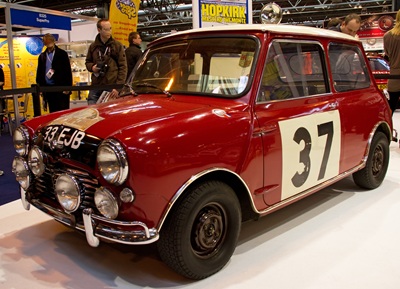
John Cooper voit très tôt le potentiel sportif de la Mini. Une première Mini Cooper apparaît au début des années 1960, puis la Cooper S’amplifie encore le phénomène. À partir de là, la petite anglaise cesse d’être seulement une solution urbaine maligne. Elle devient aussi une voiture de compétition crédible, capable de battre plus gros et plus puissants qu’elle.
Mini Cooper S de 1964.
Les victoires au Monte-Carlo en 1964, 1965 et 1967 installent durablement cette image. Elles donnent à la Mini un second récit, plus nerveux, plus spectaculaire, sans effacer son usage quotidien. C’est un point important dans sa longévité : la Mini a su rester à la fois populaire, accessible et désirable. Peu de voitures réussissent cet équilibre avec autant de naturel.
Une carrière longue, entre ville, culture et versions dérivées
La Mini occupe rapidement une place à part dans la vie britannique. On la croise en ville, dans les familles, dans les films, chez les personnalités du Swinging London et dans une foule de versions dérivées. Elle devient un objet familier, mais jamais banal. Son dessin très court, ses porte-à-faux réduits et sa présence immédiatement lisible suffisent à la faire reconnaître.
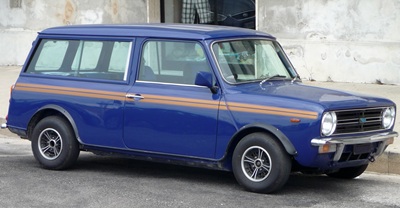
La lignée a aussi pris la forme de versions plus pratiques, comme la Clubman Estate.
Sa carrière s’étire ainsi sur plusieurs décennies, avec des variantes comme l’Estate, le Van, le Clubman et une succession de séries spéciales. La voiture évolue, mais le principe reste le même. Lorsque la production du Mini classique s’arrête en 2000, plus de 5,3 millions d’exemplaires ont été produits. Peu de petites voitures peuvent revendiquer à la fois une telle diffusion et une identité aussi nette.
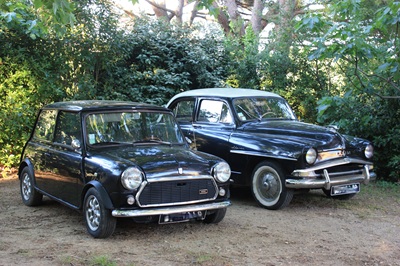
Une Mini classique exposée à côté de notre Aronde.
Cette longévité explique aussi la place particulière qu’elle conserve dans les collections. Une Mini n’intéresse pas seulement par nostalgie. Elle permet de lire très concrètement une manière de concevoir l’automobile populaire, compacte et vive, à une époque où chaque centimètre comptait encore.
De la Mini classique à la marque MINI relancée par BMW
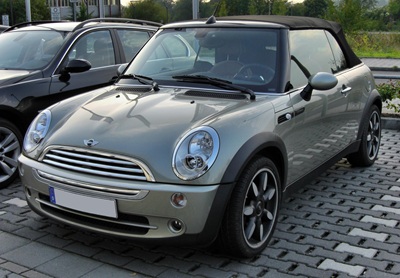
Le rachat de Rover Group par BMW en 1994 ouvre une nouvelle phase. L’idée n’est pas de reproduire la Mini à l’identique, mais d’en reprendre les codes principaux : une carrosserie courte, un dessin immédiatement reconnaissable et un comportement routier valorisé comme partie intégrante de l’identité du modèle. Après un concept présenté en 1997, la nouvelle MINI entre sur le marché en 2001.
Le renouveau de la marque MINI à l’époque BMW.
Le gabarit grandit, l’équipement change d’époque et la voiture devient plus sûre, plus lourde et plus chère aussi. Pourtant, le lien avec l’original reste visible. C’est sans doute la vraie réussite de la relance : avoir transformé une ancienne petite voiture populaire en marque à part entière, sans faire disparaître complètement ce qui rendait la Mini si particulière depuis 1959. Ce que l’on retient aujourd'hui, c’est moins un simple effet rétro qu’une idée juste, suffisamment forte pour traverser les décennies.
BMC did not create the Mini as a styling exercise. It answered a precise problem in late-1950s Britain: build a small car that remained usable by a family, economical to run and modern enough to compete with more basic microcars.
The 1959 body combines a transverse engine, front-wheel drive and four usable seats in just over three metres.
Points to keep in mind
The useful method is to take a date and ask what it changes on the car itself: badge, engine, dashboard, dealer network or service practice. If a merger or a factory decision leaves no visible trace, it matters less to the reader. The solid fact is the one you can still check on a car, a period photo or a documented part.
Les Caramagnols brings together our auto-retro pages, our classic cars and our walks through the Gulf of Saint-Tropez. The site links our collector models, our road stories and the places around them.