







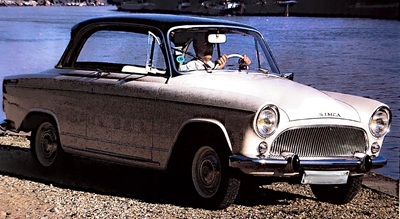
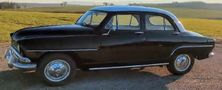
A Simca Aronde P60 cannot be authenticated by one badge. Emblems are easily replaced, side mouldings move from car to car, and many survivors have acquired parts from several model years. A dependable inspection starts with items that are difficult to alter — body, glass, roof and dashboard — before comparing those findings with the claimed trim level and engine.
Introduced in autumn 1958 for the 1959 model year, the P60 remained part of the Aronde family but looked substantially different. The saloons gained a body with a larger glass area, an extended roof and a completely restyled nose. It was a more dramatic shape than the 1956-1958 Ligne Océane, although the familiar Aronde architecture continued underneath and production moved from Nanterre to Poissy.
Start with the front
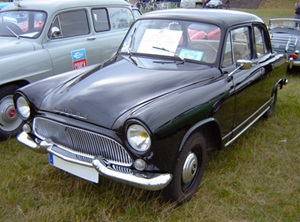
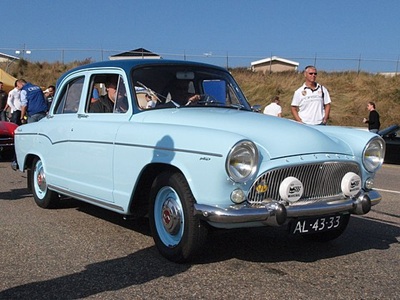
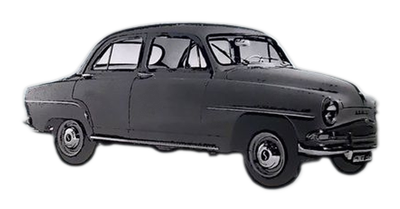
The nose provides the clearest first comparison. An Aronde 1300 Ligne Océane already has a wide grille and headlamp brows, but its forms remain rounded. The P60 has more prominent brows and its wings frame a much stronger central opening, often nicknamed the “shark mouth”. The bumper and brightwork add to the impression of width.
This treatment applies mainly to saloons and two-door coaches. Utility models adopted the P60 nose while retaining an older rear section, so a Châtelaine or Intendante should not be rejected because its roof and tail differ from an Élysée. The Plein Ciel coupé and Océane convertible, built with their own specialist bodies, also require care. A grille by itself never establishes a body style or trim level.
Check the roof, rear window and tail fins
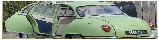
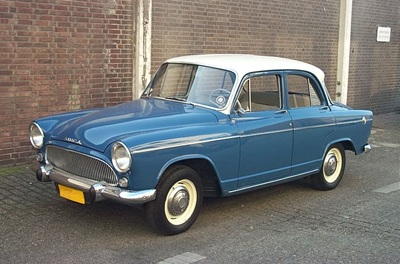
A P60 saloon has a flatter-looking roof with a central rib and a lip projecting above the panoramic rear window. The pillars and increased glass area make the passenger compartment appear brighter. At the tail, the wings end in more pronounced fins than those of the Ligne Océane. These body shapes are valuable evidence because they survive parts swapping better than hubcaps or scripts.
The side view also reveals model-year changes. Early P60s use mouldings with a distinct step; their width and finish vary with the version. When the Rush engine arrived for the 1961 model year, affected cars received thin, straight side strips. A car combining a Rush engine, early stepped trim and a first-series dashboard deserves documentary investigation. It may have been repaired, updated or merely advertised under the wrong year.
The dashboard settles difficult cases
Simca changed more than the outer panels. The P60 received a new dashboard with provision for a radio and a horizontal speed display. Early cars use a moving ribbon. The later Aronde Rush has a needle travelling across a horizontal scale. This small difference can date a vehicle even when exterior decoration has been replaced.
Inspect the instruments alongside the controls, upholstery, door cards and mounting traces. A repainted dashboard or retrimmed interior is not automatically undesirable. The important question is whether the seller can account for discrepancies between registration year, engine, fittings and presentation. Filled holes beneath a moulding, original paint behind a panel or relocated script fixings often preserve a more accurate history than the current appearance.
Do not confuse model year with first registration
The P60 designation belongs to the 1959 model year, which means some cars left the factory during late 1958. A 1958 registration does not automatically rule out a P60. Conversely, a later registration cannot prove that the vehicle carries all the features normally associated with that year. Unsold stock, export procedures and administrative delays can all shift the date.
The arrival of the Rush creates another complication. From October 1960, the new engine with a five-main-bearing crankshaft and centrifugal oil cleaner progressively replaced the Flash. Club and factory literature then referred to the Aronde Rush, while owners continued to use P60 for the body shape. In a classified advert, “P60” may therefore describe the silhouette; a restoration file needs the precise commercial version, model year and engine type.
A six-point check before buying
- Photograph all four sides. A straight front view records the grille and bumpers; a complete side view shows the roof, doors, mouldings and rear wings.
- Establish the body type. Saloons, coaches, convertibles, estates and utilities did not receive identical changes.
- Compare the dashboard. Speedometer type, radio aperture, controls and trim should belong to the claimed period.
- Record numbers privately. The chassis number, manufacturer’s plate and engine references allow a marque club to compare the car with known records.
- Ask for old parts and invoices. A documented modification is more valuable than a factory-looking car with no history.
- Use literature for the exact year. Sales brochures show the decoration, while parts catalogues or technical manuals are better for confirming a component reference.
What classified photographs cannot prove
A flattering front three-quarter photograph can display the chrome while concealing the rear of another series. A Monaco script does not turn an Élysée into a Monaco, and a red rocker cover does not establish that a complete Rush engine is present. These cars endured accidents, parts shortages and repairs carried out when concours authenticity was not the owner’s concern.
That history does not make a modified P60 worthless. It may be sound, enjoyable and interesting in its own right. The essential distinction is between a disclosed alteration and an expensive version claimed without evidence. The purchase price and the cost of returning the car to its factory specification will be very different.
Build the identification from three groups of evidence
The body first places the vehicle within the P60 generation. Dashboard and side trim then narrow the period. Engine and equipment finally test the commercial designation. When all three groups agree, the identification is persuasive. When they conflict, numbers, invoices and advice from a Simca club should carry more weight than the seller’s narrative.
The main Simca P60 page places the model within the wider Aronde story. For the equipment hierarchy, continue with Étoile, Élysée, Montlhéry and Monaco: the differences that matter.
