












Austin and Morris Mini: history, engineering and legacy
Presented by the British Motor Corporation on 26 August 1959, the Mini first appeared as the Austin Seven and the Morris Mini-Minor. Alec Issigonis drew it as a four-seat car in just 3.05 metres, with a packaging layout that would influence generations of small cars. Its story is as much about clever engineering as it is about rally wins, popular culture and the later BMW-era MINI.

1959: a practical answer to a real problem
In the mid-1950s, the British Motor Corporation needed a car that could carry four people while keeping running costs low and dimensions extremely tight. The context mattered. After the 1956 Suez Crisis, fuel economy and compactness again became central arguments in the British market. Alec Issigonis was therefore asked to design a true small family car, not a stopgap microcar. When the model was unveiled on 26 August 1959, the public saw two nearly identical versions: the Austin Seven and the Morris Mini-Minor.
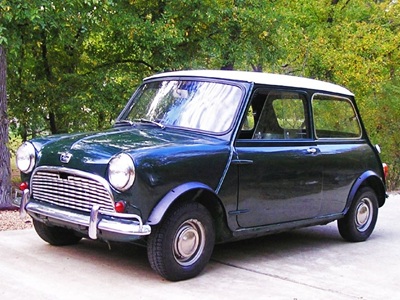
The specification looked modest, yet it already contained the whole idea: an 848 cc four-cylinder engine, 34 hp, four seats and a total length of only 3.05 metres. The Mini was not created as an image car. It was built to solve an everyday problem with unusual efficiency. That is exactly why it spread so quickly beyond its original segment.
A layout that changed the small car
The Mini's importance does not come from one isolated trick, but from a coherent package: transverse engine, front-wheel drive, wheels pushed out to the corners, compact subframes and rubber suspension. Today those choices feel familiar. In 1959, bringing them together in such a short car was remarkable. According to BMW Group's historical material, almost 80 per cent of the car's footprint was used for passengers and luggage, which says a great deal about the intelligence of the design.
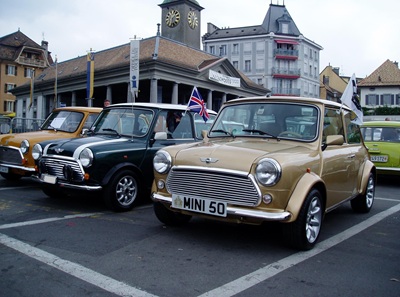
This layout also shaped the way the car drove. The Mini felt alert, easy to place and somehow larger inside than its dimensions suggested. Its road manners were not a styling by-product. They were the direct result of its engineering. That technical base is what later allowed the Mini to move beyond the role of a merely economical small car.
From everyday car to Cooper and rally winner
John Cooper recognised the Mini's sporting potential very early on. A first Mini Cooper appeared at the start of the 1960s, and the Cooper S pushed the idea even further. From that point, the little British car was no longer only a smart urban solution. It also became a credible competition car, capable of beating bigger and more powerful rivals.
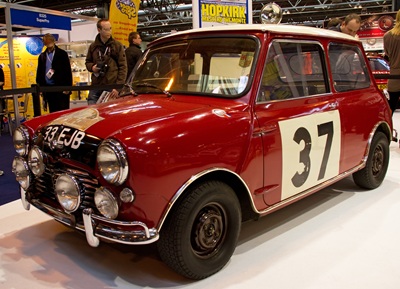
Its Monte Carlo victories in 1964, 1965 and 1967 fixed that image for good. They gave the Mini a second identity, faster and more dramatic, without taking away its everyday usefulness. That balance mattered greatly to its long life. The Mini managed to remain popular, accessible and desirable at the same time.
A long career, between city life, culture and derivatives
The Mini soon occupied a singular place in British life. It appeared in city streets, family routines, films, the garages of famous owners and an ever-growing range of derivatives. It became familiar, but never ordinary. Its short body, tiny overhangs and instantly readable shape were enough to make it stand out.
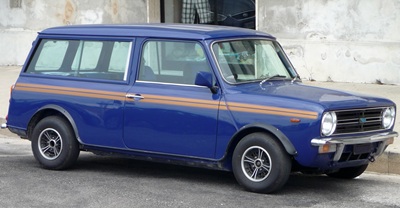
Its career therefore stretched across decades, with versions such as the Estate, the Van, the Clubman and a long list of special editions. The car evolved, but the principle remained the same. When production of the classic Mini ended in 2000, more than 5.3 million cars had been built. Very few small cars can claim such reach together with such a clear identity.
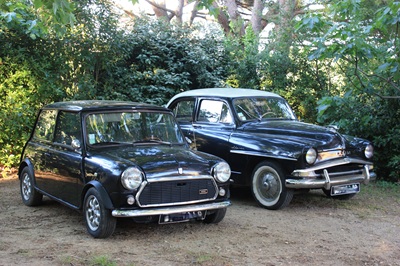
That long life also explains the Mini's special place in collections today. It is not interesting only because of nostalgia. It allows one to read, very concretely, a way of designing a popular, compact and lively car at a time when every centimetre still mattered.
From the classic Mini to the BMW-era MINI
BMW's takeover of Rover Group in 1994 opened a new chapter. The goal was not to reproduce the Mini exactly as it had been, but to retain its main codes: a short body, an immediately recognisable shape and a driving character treated as part of the model's identity. After a concept shown in 1997, the new MINI reached the market in 2001.
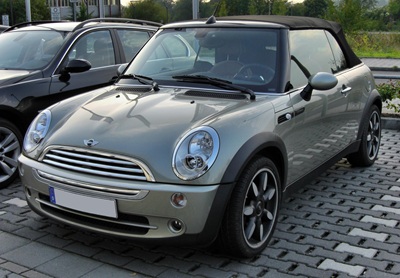
The car grew in size, moved into a different equipment and price class, and became safer, heavier and much more modern. Yet the link to the original remained visible. That is probably the true success of the relaunch: turning a former people's small car into a brand in its own right without completely losing what had made the Mini special since 1959. What matters today is not a simple retro effect, but a sound idea strong enough to survive several decades.
To place the Mini in context, you can also read our Mini Mayfair in the Gulf of Saint-Tropez, along with the Mini Mayfair.




Sources
- BMW Group PressClub, 1959 - 2019. Sixty Years of MINI
- BMW Group PressClub, the Mini and its Monte Carlo victories
- MINI UK, Plant Oxford Celebrates 15 years of MINI production
Chronicle through time
Why BMC created the Mini in 1959
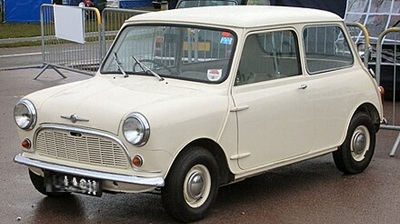
The Mini answered a practical brief: four usable seats, low fuel use and as much space as possible in a very short car.
