












AUSTIN
Austin holds a central place in British motoring history. The brand was founded in December 1905 at Longbridge, near Birmingham, at a time when the car was still expensive and technically unsettled. Its story is worth following because it does not move in a single straight line. Austin began with large cars, passed through two world wars, faced a serious crisis in the early 1920s, and then found its real historical weight with smaller, more widely sold models. From the 25/30 hp of 1906 to the Austin Seven of 1922, then the A30 of 1952 and the Mini of 1959, the story is largely one of changing scale.

Longbridge, Herbert Austin and the first large-displacement cars
Before lending his name to a marque, Herbert Austin had already made a name for himself in engineering. He went to Australia in the 1880s, worked for Frederick Wolseley's company, then returned to England with it to set up a new factory in Birmingham. At Wolseley, he played a decisive role in the firm's early motor-car work. By the time he left, he was already recognised as a leading engineer.
After a disagreement over engine choices, Herbert Austin founded his own company in December 1905 in a former printing works at Longbridge. The first model offered for sale in the spring of 1906 was a 25/30 hp with a four-cylinder engine of 5,182 cc. Austin therefore did not begin as a maker of tiny cars. The early range was oriented toward large automobiles, soon joined by 18/24, 40 hp and 60 hp models. This was still the era of a young industry in which power, size and robustness mattered as much as price.
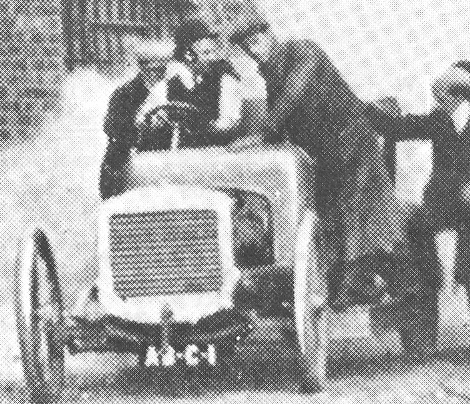
Industrial growth was nevertheless rapid. Austin moved from about 200 cars produced in 1910 to 1,100 in 1912. By 1914, the marque already had a clearly structured line-up built around the Ten, Twenty and Thirty. Longbridge was no longer just a launch workshop. The site was taking on the industrial scale that would matter for decades.
War, post-war adjustment and the crisis that forced Austin to change
The First World War profoundly changed the company. Like much of British industry, Austin turned toward war production. The scale of this expansion was considerable: the workforce rose from around 2,600 employees to more than 22,000. The factories produced shells, guns, vehicles and aircraft. Austin came out of the war as a major industrial name, but wartime scale did not guarantee commercial success in peacetime.
After the war, Herbert Austin tried to apply American-style mass-production principles. The company concentrated on a single model, the Twenty of 3,620 cc. The wager did not work as expected. Sales stayed below target and by the early 1920s the firm was in financial difficulty. This matters because the future Austin Seven did not appear as a stylistic whim or a marketing trick, but as a very concrete answer to an industrial and commercial problem.
To revive sales, Austin introduced a medium-sized Twelve in 1922, but above all a small car that would permanently alter the brand's position. From that moment, Austin began to matter not only as an established manufacturer, but as a major force in the spread of car ownership in Britain.
The Austin Seven of 1922: a small car that truly changed the brand's place
The Seven, often called the Baby Austin, was launched in 1922 with a 696 cc engine, later enlarged to 747 cc. It does not sum up the whole Austin story, but it marks the clearest turning point. With this car, Austin moved from being an already established manufacturer to becoming a company able to reach a much broader public. The issue was not simply a smaller engine size. It was a lighter, more affordable and more widely saleable car in a country where motoring was still far from ordinary.

The Seven restored the company's fortunes. It remained in the range until 1939 and around 375,000 examples were built. That volume says a great deal about what it represented. Austin did not invent the idea of the popular small car, but it gave that idea decisive industrial scale in the British context. It is the model that truly placed the marque in the history of mass motoring.
Its influence also reached beyond Britain. When BMW entered automobile production, the company took over the Eisenach plant in 1928, where the Dixi 3/15 PS was being built under licence from the Austin Seven. In 1929 the first BMW 3/15 appeared, directly derived from that technical line. BMW ended the licence in 1932 with the 3/20, its first in-house automobile design, but the starting point remained a licensed version of the Austin Seven.
From the 1930s to the post-war years: Austin broadens its range again
The success of the Seven did not erase the rest of the production programme. In the 1930s, Austin expanded its range with numerous medium and larger models using 4- and 6-cylinder engines, while keeping the Seven as its popular base model. The marque was therefore not confined to a single segment. It could cover several levels of the British market, which explains its strength before the Second World War.
In 1936 Herbert Austin became Baron Austin of Longbridge. He remained closely tied to the company until his death in 1941. The same industrial centrality reappeared during the Second World War. Austin contributed heavily to military production, with more than 82,000 trucks, thousands of Hurricane, Stirling, Battle and Lancaster aircraft, and more than 100,000 cars and utility vehicles. The company therefore remained a strategic industrial actor well beyond civilian car making.
After 1945, Austin first restarted pre-war models such as the Eight, Ten and Twelve, then moved its range forward. A Sixteen appeared with a new 2,199 cc overhead-valve engine, Austin's first OHV design. By the late 1940s, the company had become a major exporter of British cars. New models arrived, including the A40, A70 and A90, all with OHV engines. The post-war years were therefore not only a time of recovery, but also of technical and commercial reorganisation.
1952: the A30, the A Series engine and the birth of BMC
In 1952, Austin launched a new small car, the A30, powered by the A Series engine of 803 cc. The positioning was clear: it was intended to compete directly with the Morris Minor. This model matters more than it may seem. It brought Austin back into the field of widely sold small saloons, but with a power unit that would prove exceptionally durable.
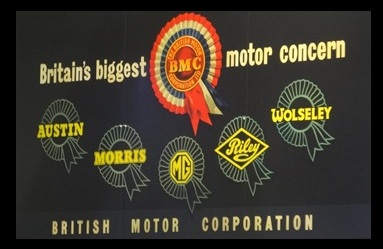
In the same year, Austin and Morris merged to form the British Motor Corporation, or BMC. Austin became the dominant partner. In that new organisation, the A Series engine was not limited to the A30. In its various developments, it powered the group's smaller cars for much of the next forty years. That technical continuity is essential for understanding the line from the A30 to the Mini.
The early 1950s therefore marked another shift. Austin was no longer only an independent marque with its own history. It became a central name within a larger industrial group in which platforms, engines and models increasingly circulated across several badges. That logic prepared future successes, but it already carried the confusion and duplication that would later weaken the group.
1959: Issigonis's Austin Seven, the Mini, and the gradual fading of the Austin name
On 26 August 1959, BMC unveiled its new small car designed by Alec Issigonis. The public first saw it under two almost twin names: Austin Seven and Morris Mini-Minor. The specification explains much of its importance: a 848 cc engine producing 34 hp, mounted transversely at the front, front-wheel drive, seating for four, and an overall length of just 3.05 metres. In a few figures, the whole interest of the design becomes clear: making the best possible use of very little space without giving up the idea of a true family car.
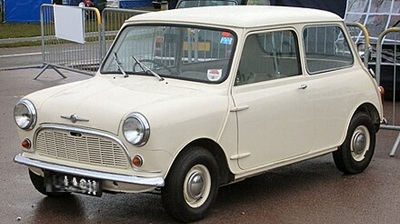
The car quickly became more famous simply as the Mini, but it is worth remembering that in Austin form it was first called the Austin Seven. That link is more than a commercial detail. It connects the foundational small car of 1922 to the revolutionary small car of 1959. Between the two, Austin retained the same place in British industrial history: a marque able to do a great deal with little space, little displacement and a price suited to wide circulation.
What followed was more difficult. In 1966, BMC merged with Jaguar to form British Motor Holdings. In 1969, a further merger with Leyland created the British Leyland Motor Corporation. The Austin name survived within the Austin Morris division, but the group now accumulated overlapping ranges, labour conflict, an uneven quality reputation and major financial trouble. The nationalisation of 1975 confirmed the depth of the crisis.
In the 1980s, the car division became Austin Rover. The Metro, Maestro and Montego were the last models to carry the Austin name. After 1986, only MG and Rover were retained. Austin then disappeared as an active marque, but its history remains easy to read: a strong industrial foundation, a popular turning point with the Seven, a new technical phase with the A30, and global visibility through the Mini.
Chronological and technical landmarks
- 1905: creation of the Austin Motor Company at Longbridge
- 1906: Austin 25/30 hp, 4-cylinder, 5,182 cc
- 1922: Austin Seven, 696 cc then 747 cc
- 1939: around 375,000 Austin Sevens built
- 1952: Austin A30, A Series engine, 803 cc; Austin-Morris merger and creation of BMC
- 1959: Austin Seven / Morris Mini-Minor, 848 cc, 34 hp, 3.05 m
- 1966: British Motor Holdings
- 1969: British Leyland Motor Corporation
- 1975: nationalisation
- 1986: gradual disappearance of the Austin name in favour of Rover and MG
What remains of Austin is less a single car than a series of practical industrial answers. The marque began with powerful models for a limited clientele, passed through wartime economies, recognised the need for a widely sold small car, and then took part in one of the most influential automobile layouts of the twentieth century with the Mini. Austin is no longer a living marque, but it remains a useful thread for reading nearly a century of British motoring history.
This Austin history also comes into focus through the Austin and Morris Mini story, along with the Mini Mayfair.




Sources
- National Motor Museum, Austin Motor Company
- Encyclopaedia Britannica, Herbert Austin, Baron Austin
- Encyclopaedia Britannica, Austin Motor Co. Ltd.
- BMW Group PressClub, BMW chronology and the licensed Austin Seven
- BMW Group PressClub, 1959 - 2019. Sixty Years of Mini
- Historical illustrations: file details and licence status documented locally in the project documentation.
Chronicle through time
Austin, from Longbridge to the Mini: the full story of the marque
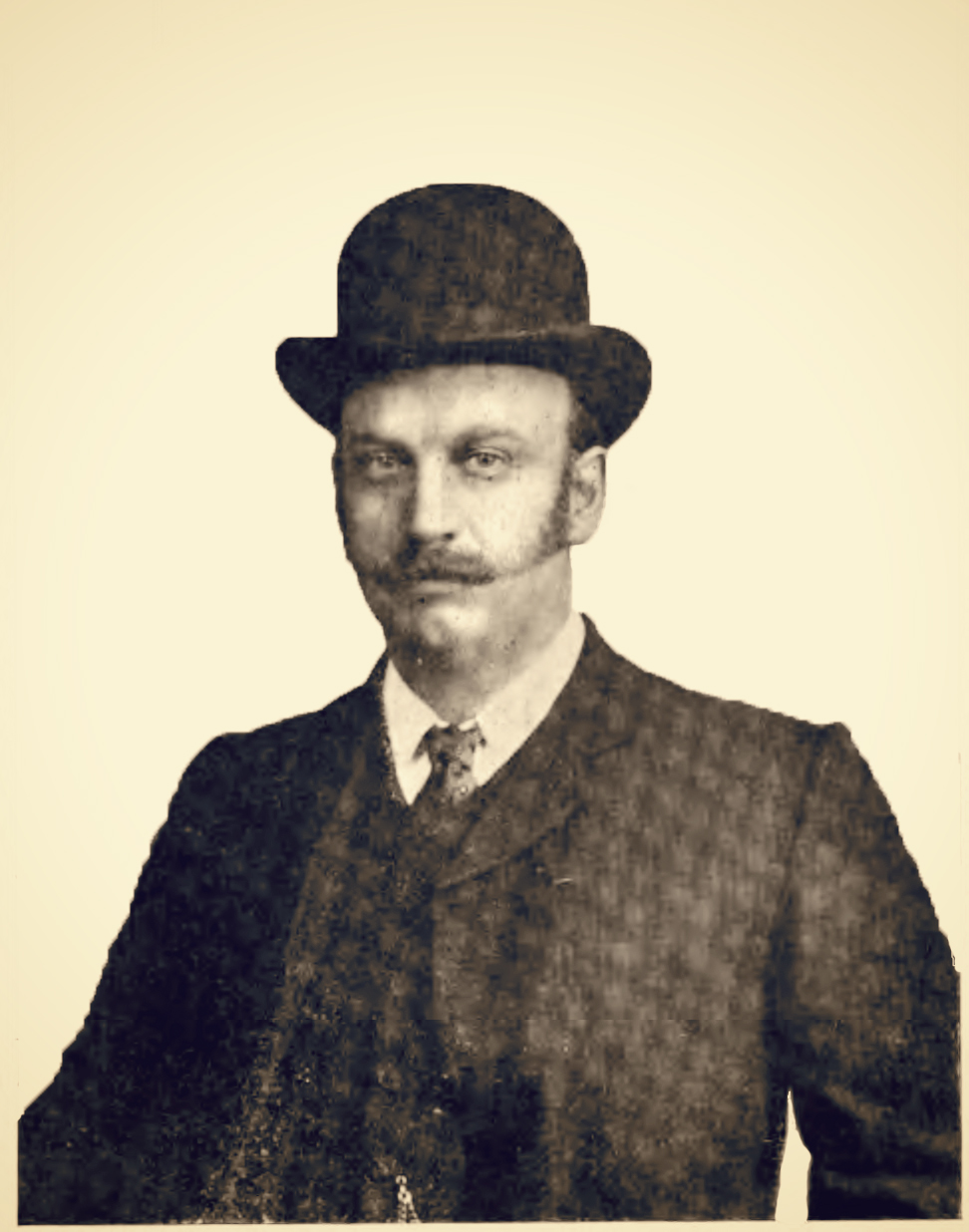
From Longbridge in 1905 to the fading of the badge in the 1980s, Austin reflects a large part of Britain’s popular motoring history.
