








Austin Mini Mayfair: a more polished Mini for the late 1980s
Launched in September 1982, the Mini Mayfair replaced the Mini 1000 HLE and marked a discreet but important turn in the long life of the classic Mini. The basis remained that of a 998 cc front-wheel-drive small car, yet the presentation became more refined and helped Austin Rover keep the Mini alive at the moment when the Metro was meant to take over.
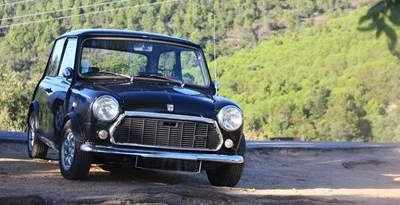
September 1982: the Mini changes tone without changing format
By the early 1980s, the Mini was no longer a novelty. The Austin Metro had arrived and was supposed to take over in the British small-car market. Yet the Mini still had a loyal public. It remained extremely compact, easy to place in traffic and backed by a genuine technical history. That is the context in which the Mini Mayfair appeared in September 1982.
The point was not to turn the car into a luxury model in the sense of a large saloon. The idea was to give the Mini a more carefully presented character, with a richer cabin and more visible exterior details. BMW Group Classic notes that the Mayfair replaced the Mini 1000 HLE, while Somerford Mini points out that it helped renew public interest in the model. Austin Rover therefore recognised that there was still room for a Mini that felt less strictly utilitarian and more openly treated as a small car with personality.
That shift matters in the model’s history. The Mayfair did not try to challenge the Cooper as a sporting Mini. It moved the Mini into a more civilised, more urban and often more export-friendly register, especially in markets that appreciated exactly that mix of compact British proportions and slightly more polished trim.
A 998 cc Mini, but better dressed
Under the body, the Mini Mayfair remained a classic Mini. Power came from the 998 cc A-Plus four-cylinder engine, quoted by BMW Group Classic at 40 hp at 5,000 rpm. This was never meant to be dramatic. The interest of the Mayfair lies in the balance between a tiny footprint, a still-light car and a presentation that makes it feel more complete than the entry-level versions.
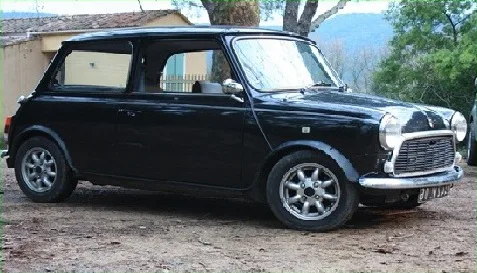
Depending on year and market, that meant softer trim, more carpeting, better-finished interior details, opening rear windows or fittings that gave the car a less austere tone. On many late-1980s cars, the details that fixed the Mayfair’s image are still easy to recognise: chrome bumpers, a touch of wood veneer on the dashboard, matching steering wheel and an atmosphere that feels more considered than that of a Mini City.
On the road, the philosophy did not change. A Mayfair remained narrow, low, very direct and more lively than it looked. One still found the singular driving position, the near-vertical windscreen and the sense of piloting something far smaller than modern traffic. The difference lay mostly in ambience. A Mayfair felt less like a stripped Mini and more like a complete one, well presented for its class and period.
1984 and 1985: the model follows the key late Mini updates
The Mayfair settled into the range strongly enough to follow the important changes of the mid-1980s. BMW Group Classic notes that the Mini received 12-inch wheels in October 1984. That matters more than it may seem. It altered the stance of the car, worked with the wheel-arch extensions of later cars and contributed to the slightly more modern look of Minis from this period.
One year later, the central instrument cluster that had long been typical of the Mini was replaced by a two-part arrangement placed directly in front of the driver. The car remained instantly recognisable, but the experience on board changed slightly. The Mini did not stop feeling old-fashioned in spirit; it simply became a little clearer and easier to use every day.
Those updates help explain why late-1980s Mayfairs occupy a special place today. They preserve the shape and packaging of the classic Mini, but with the last refinements of the range before the 1.3-litre cars of the 1990s. For many enthusiasts, that point of balance is precisely what makes them appealing.
A collector’s Mini that is not trying to be a Cooper
In the public imagination, the Mini is often reduced to the Cooper and to rally victories. That leaves aside an important part of the car’s career. Models such as the Mayfair tell a different story: the Mini as a small, habitable and well-presented car that managed to stay commercially alive because it changed tone without abandoning its basic layout.
The Mayfair remains interesting today for exactly that reason. It does not promise sporting legend, but it reads the road-going and commercial evolution of the Mini very clearly at the end of its classic life. It also offers a way into the classic Mini world without automatically chasing the most expensive or most mythologised version. It shows a long industrial story nearing its final stage, when a model survives not only out of necessity, but because it has become familiar, recognisable and still desirable.
In May 1992, the 1.3-litre Mini Mayfair replaced the earlier 998 cc version. The line did not enter a different world, but the change marked the end of a phase. The Mini Mayfairs built from 1982 to 1992 therefore stand as witnesses to a transitional decade, between everyday small car, better-equipped series and future collector’s model. That is probably why they still matter: they show a Mini that had reached maturity while remaining compact, readable and unmistakably itself.
To place the Mayfair within the broader Mini story, the page Austin and Morris Mini: history, engineering and legacy follows the full chronology. For our own 1988 car, the page Our 1988 Austin Mini Mayfair extends this model portrait through a lived example.