






Citroën 2CV4 Restoration by Garage SAVA - Rioz: chassis, engine and reassembly in the workshop
After arriving on a trailer, this 2CV4 stayed in the workshop for many months before the restoration truly began. The work then followed the familiar stages of an older Citroën, but with heavier findings on the body side than the first inspection had suggested.
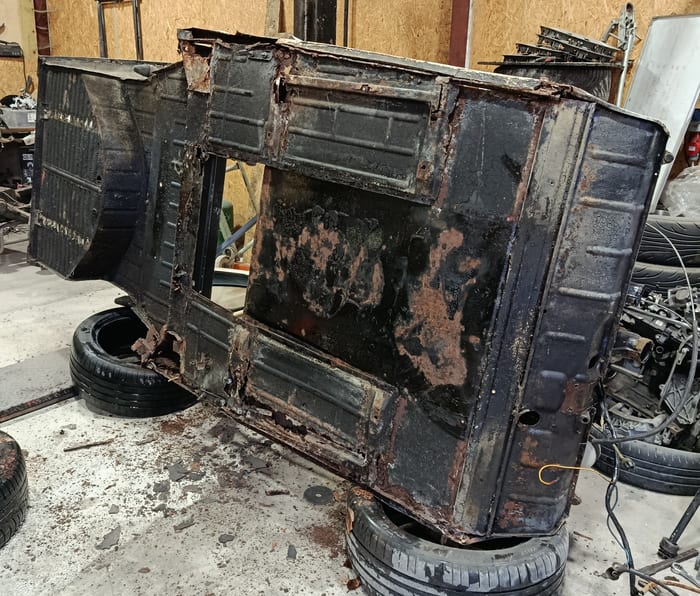
The chassis could still be saved. The body, on the other hand, proved far worse: both floors and the sills had already been badly dealt with in the past and required a much more complete intervention before any serious return to the road.
Starting by separating body and chassis
When the restoration really began, the decisive first move was to separate the body from the chassis. On a 2CV, that is never a secondary operation. It is the only honest way to see what belongs to surface corrosion and what affects the structure itself. As long as the car stays together, part of the damage remains hidden or underestimated.
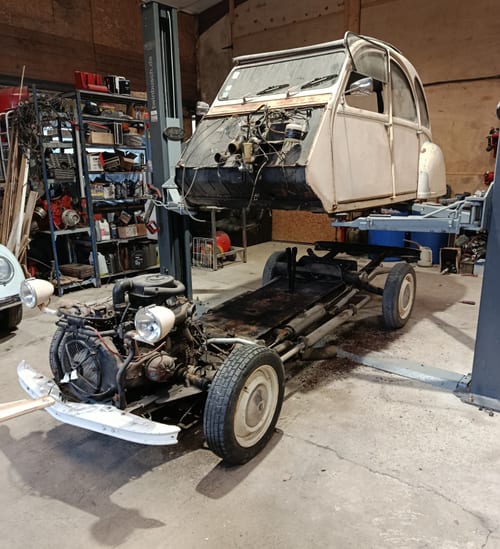
The result was twofold. On the one hand, the chassis turned out to be good and largely recoverable, with only a few local points to repair. On the other hand, the body was in worse condition than the first look had suggested: both floors were dead, the sills were badly damaged and earlier repairs had mostly hidden corrosion instead of solving it. At that point, the decision became simple: the underbody had to be rebuilt properly.
Putting the structure right before anything else
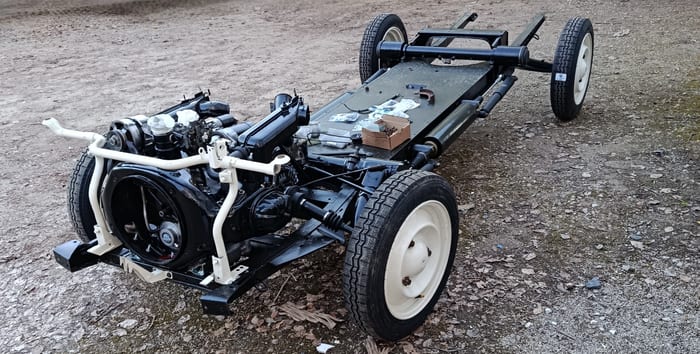
On this 2CV4, the part that required the greatest amount of work therefore came from underneath the car. The lower structure was rebuilt, the rusted zones around the lower half-bulkhead were cut out and rewelded, and the weak areas around the tank received local repairs. Once those operations were completed, the whole was brushed, degreased, painted and protected again with anti-rust chassis lacquer.
That kind of work is not the most visible once a car is finished, yet it governs everything else. On an older 2CV, there is no point rebuilding the mechanics or the cabin properly if the base still rests on an uncertain underbody. Here the choice was clear: reset the structure first, then move forward.
Rebuilding the mechanics without leaving weak points behind
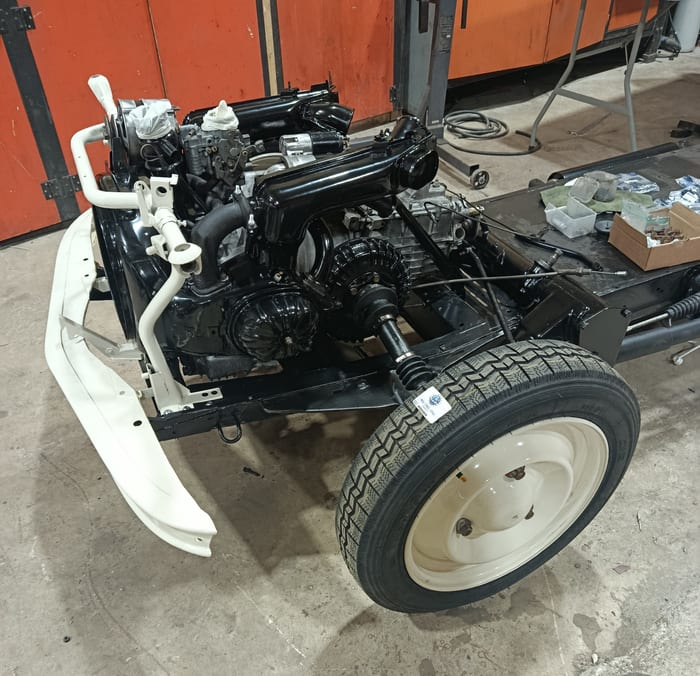
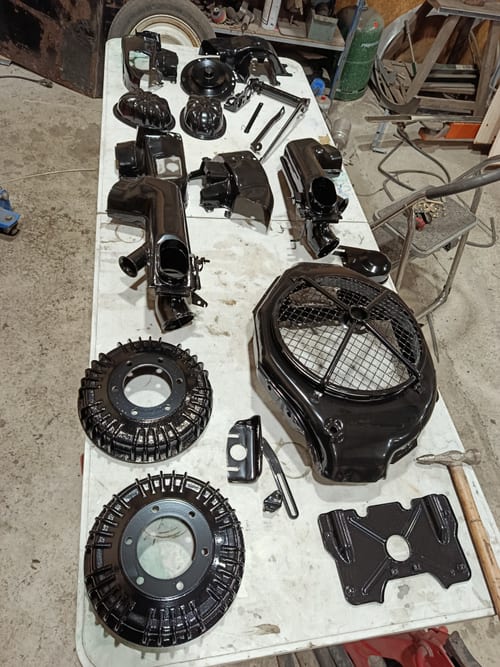
Once that foundation was made sound, the mechanical side followed the logic of a full restoration. Brakes were rebuilt, the suspension renewed, the suspension pots and dampers replaced, and everything that simply belonged to long-term wear was brought back to new condition. The engine was rebuilt with cylinders, pistons, a revised cylinder head and electronic ignition. The gearbox was removed, opened for inspection and made tight again with all sealing rings replaced. The driveshafts were renewed with new gaiters and a full refurbishment.
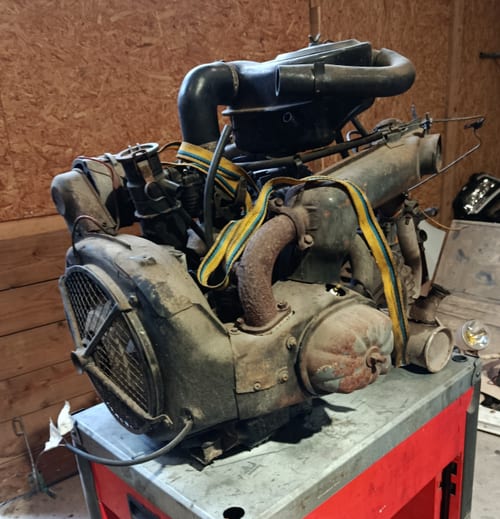
The choice of electronic ignition deserves a note because it reflects the spirit of the project. It is neither a visible modification nor a betrayal of the car’s character, but a discreet improvement aimed at more reliable starts and fewer awkward adjustments on the old breaker-point system. Everything else, by contrast, remains very close to the original spirit.
Tank, glazing, tyres and use-related details
The 1974 metal fuel tank did not require a heavy internal coating process. A serious cleaning, degreasing and inspection were enough, together with a new pump and sender unit. All the windows were removed and fitted back with new seals, not out of a taste for replacing things, but because old rubber would have cracked or leaked again during reassembly. The same logic applied to the four new tyres, the sealing elements and the smaller parts needed for a dependable restart.
The ventilation flap below the windscreen, a frequent water-ingress point on 2CVs, was also repaired. Once again, restoration advances through concrete details: not grand declarations, but the kind of points that prevent later rework because they were handled properly while the car was already apart.
A finish chosen to stay within the Citroën spirit
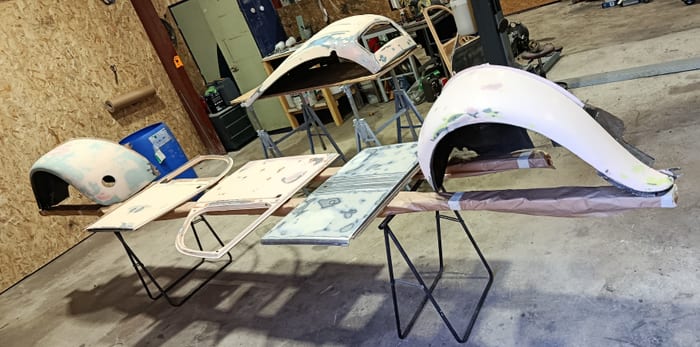
The body is due to receive a green shade. It is not the car’s original sand colour, yet it remains a Citroën period tone. Wheels and oven-coated metal parts stay in ivory white, while the hood, panels and most of the interior move toward black. The original rear bench, still recoverable, is kept after repair, whereas a new front bench is planned for the front of the car.
The one deliberate deviation concerns family use: rear seat belts are being added for child safety. On a 1974 2CV they were not fitted as standard, but the shell allows the addition without breaking the general spirit of the car. Once the shell has been painted, final reassembly can resume with the interior, the electrical work and the closing-up of the whole.
To go back to the starting point, the page on the first assessment of this 2CV4 explains how the car was chosen in the Doubs. And to place the work within the longer model story, it also helps to return to the general history of the Citroën 2CV.
The starting point of the project is covered on the page about the purchase and first inspection of the 2CV4. For the broader historical frame, the history page of the 2CV remains the best companion.

Sources
- Internal audio transcript: restoration of the 2CV4, SAVA workshop, work status and technical choices.
