





Panhard Dyna Z12: history, technical data and collector interest
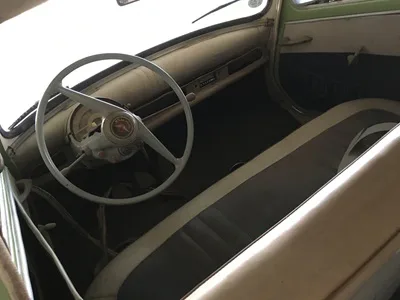
The Panhard Dyna Z12 belongs to the most interesting part of the Dyna Z story. Built between August 1956 and October 1958, it kept the technical originality of the model while bringing a more careful presentation and richer trims.
A Dyna Z with more finish
The Z12 sits above the simpler Z11 in the Dyna Z range. It was offered as Luxe Spécial, then Grand Luxe and Grand Standing depending on the year and equipment level. It did not change the nature of the Dyna Z, but gave it a more comfortable and better presented form.
That makes the Z12 a useful model for understanding Panhard in the late 1950s. The company was trying to keep its technical identity, but also had to control production costs and answer customers who expected more comfort and a more flattering finish.
Key facts
- Model: Panhard Dyna Z12.
- Production period: August 1956 to October 1958.
- Body: four-door saloon, usually presented as a six-seat family car.
- Layout: front engine, front-wheel drive.
- Engine: air-cooled flat twin, 851 cc.
- Power: around 42 hp in standard Z12 form, according to version and source.
- Gearbox: four-speed manual.
- Trims: Luxe Spécial, Grand Luxe and Grand Standing.
- Interest: strong Panhard personality, good usability, distinctive styling and a still readable technical concept.
Historical context
The Dyna Z was presented to the press on 17 June 1953 and reached customers in 1954. It replaced the Dyna X with a larger and more aerodynamic car. At the beginning, Panhard relied heavily on Duralinox, an aluminium alloy that helped keep the weight low. The solution was technically attractive, but too costly for a manufacturer of Panhard's size.
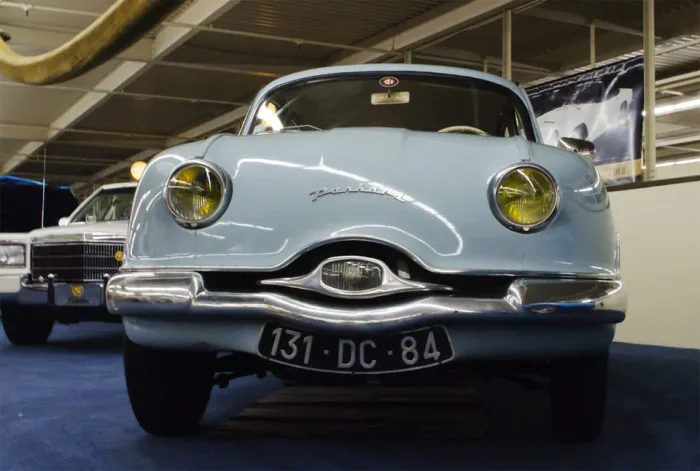
The Z12 belongs to the period when the model had already moved toward more rational production. Steel and mixed construction became more common, and the car gained weight compared with the earliest aluminium Dyna Z. At the same time, the presentation improved. That is the central balance of the Z12: less radical than the first Z1, but more polished and easier to place in the market.
Technical design
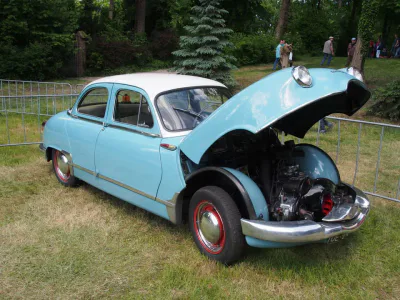
The Z12 keeps the main Panhard choices: an air-cooled flat twin, front-wheel drive, a four-speed gearbox and a body designed around aerodynamic efficiency. The flat floor and generous cabin are important parts of the design. They show that the car was not only a technical curiosity, but also a real family saloon.
On 1958 cars, some versions received the M5 Aérodyne engine with an improved cooling turbine and shrouding. The point was not only power. Panhard also wanted better operating smoothness and a more controlled cooling system. As always with the brand, details mattered.
Technical data
- Type: four-door saloon.
- Engine: four-stroke air-cooled flat twin.
- Displacement: 851 cc.
- Bore and stroke: 85 x 75 mm.
- Power: about 42 hp at 5,300 rpm for standard versions.
- Torque: around 6.5 mkg at 3,500 rpm, depending on version.
- Transmission: front-wheel drive.
- Maximum speed: about 130 km/h.
- Fuel consumption: often around 6 L/100 km in period data, depending on use and tuning.
- Wheelbase: 2,570 mm.
- Length: about 4,580 mm.
- Width: about 1,660 mm.
The exact figures vary with year, trim and source. The useful point is stable: the Z12 tries to remain a spacious and lively saloon without losing the Panhard habit of extracting a lot from a small engine.
Strengths and weak points
The main strengths are clear: generous interior room, original engineering, moderate fuel consumption, a recognisable body shape and a stronger trim level than the simpler Dyna Z versions. A good Z12 feels like a real family car, not a miniature or a compromise.
The weak points are just as important when buying or restoring one. The car is technically specific, and it does not always tolerate approximate work. Corrosion, old repairs, missing trim, engine condition, cooling, gearbox adjustment and braking all deserve careful inspection. Documentation and contact with Panhard specialists can save a lot of time.
Collector interest today
The Z12 has a strong appeal for collectors who want a Panhard that is distinctive without being too obscure. It is not the earliest and lightest Dyna Z, but it shows the model at a mature moment, with better equipment and a more comfortable personality. In Grand Luxe or Grand Standing form, it also has a discreet elegance that suits its technical originality.
A well identified Z12, coherent in its trim and healthy in its structure, is therefore more than a curiosity. It is a readable example of French post-war engineering, built at a time when Panhard still believed that intelligence, lightness and aerodynamic care could make a small engine do serious work.
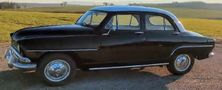
To place the Dyna Z in context, you can also read our Dyna Z12 in the Gulf of Saint-Tropez, along with the collectible Panhard Dyna Z.
Sources
- Club Panhard et Levassor France - Dyna Z documentation
- Wikipedia - Panhard Dyna Z
- Wikipedia - Panhard Dyna Z
- Automobile-Catalog - 1957 Panhard Dyna Berline Grand Luxe Z12
- Automobile-Catalog - 1957 Panhard Dyna Berline Grand Standing Z12
- Panhard Belgique - Dyna Z technical data
- Wikimedia Commons - File:1957 Panhard Dyna Z (France Domestic) (8391189016).jpg
- Wikimedia Commons - File:Panhard Dyna Z12 open hood, pic2.JPG
