







Lateen sails in Saint-Tropez
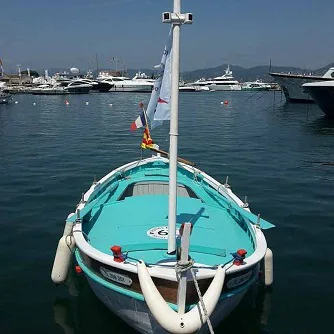
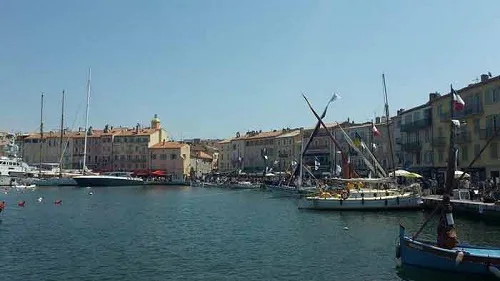
In Saint-Tropez, Les Voiles latines bring an old form of Mediterranean sailing back to the old harbour: low wooden hulls, slanting spars and triangular sails. The gathering has existed since 2001 and highlights traditional boats from around the Mediterranean. The images kept here come from the 2015 edition and preserve the memory of a modest, practical event built around maritime heritage, crews and workshop skills.
A gathering born around the old harbour
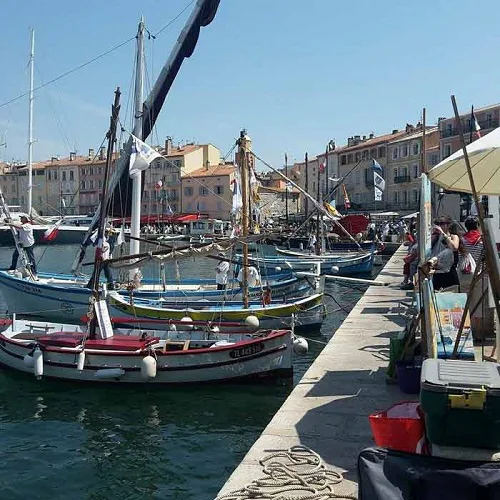
The event appeared in Saint-Tropez in 2001, around the harbour and local sailing circles. It does not seek the scale of the major autumn regattas. It focuses instead on small craft, working boats, timber frames and sails once used for fishing, coastal trade and short links between Mediterranean shores.
The timing has varied over the years, with editions held in spring or late spring. That matters when planning a visit: before coming, check the official calendar, because dates, occupied quays, sailing sessions and announced workshops can change from one edition to the next.
What a lateen sail tells
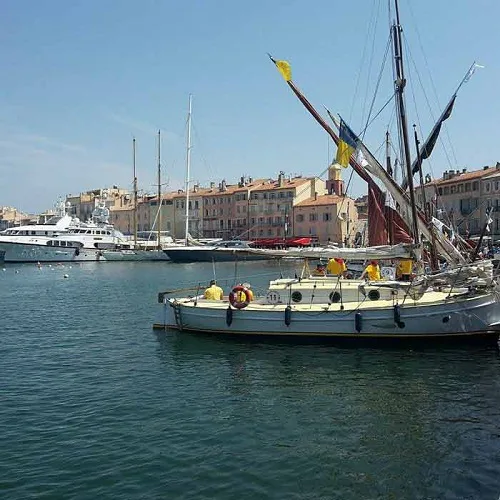
A lateen sail is recognised by its triangular shape and its long spar set at an angle. It requires precise handling, because rig, wind and boat movement answer one another without automation. On the quays, this memory appears through pointus, Marseille and Catalan boats, feluccas, gozzos, tarquiers and tartanons.
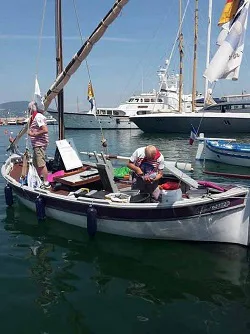
These names are not just picturesque vocabulary. They refer to uses, harbours, building methods and ways of sailing. The pointu, for instance, remains closely linked with Provençal coastal fishing. Wider hulls, spars, ropes and painted sides give each boat a readable presence, even for visitors who do not know the technical details.
Boats, crews and manual skills
Les Voiles latines are as interesting in the waiting moments along the quays as during the sailing itself. Crews prepare sails, adjust lines, watch the wind and put back in order what the outing has shifted. Stands and workshops around ship carpentry, ropework or traditional crafts show that this heritage stays alive when knowledge is passed on by hand.
Food and Mediterranean cultures have also been part of the gathering’s spirit. They give the event a broader frame without turning the boats into background scenery. The central subject remains the same: understanding how an old form of sailing continues to exist, not as a fixed reenactment, but as a practice carried by associations, owners and enthusiasts.
Looking at Saint-Tropez differently
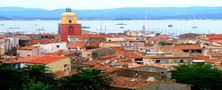
This gathering gives the old harbour another reading. Saint-Tropez no longer appears only as a fashionable port or a summer image, but as an old maritime place connected with fishermen, boatyards, coastal exchanges and Mediterranean skills. The boats are often modest in size, yet they make you look closely at a hull line, a sail setting and the patience of a crew.
For visitors, the right rhythm is simple: walk along the quays, take time to read the boat names, watch departures if the wind allows, then return to the harbour to see the boats moored. Les Voiles latines are not about chasing a large spectacle. They are better discovered through details, close to varnished wood, hoisted sails and pontoon conversations.
Continue the nautical visit
Les Voiles latines belong to a wider family of maritime events and walks around the gulf.
- Return to recurring events in the gulf
- See regattas and major sailing events
- Walk through Saint-Tropez
- Walk around the Gulf of Saint-Tropez