









Walking Through Gassin
Above the bay, Gassin combines belvedere, ramparts, vineyards, olive trees, a remarkable garden and an old farming memory within a very tight space.
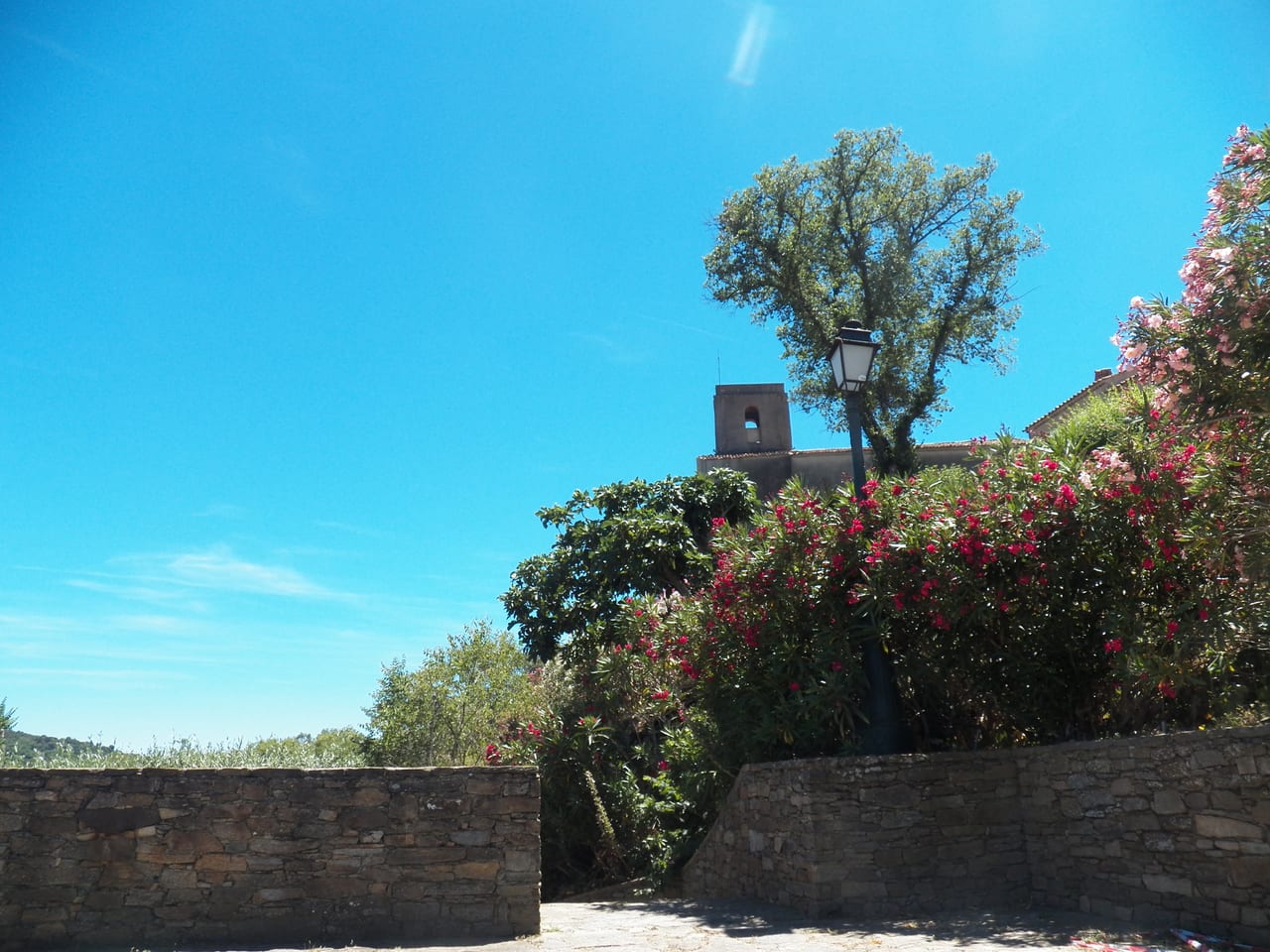
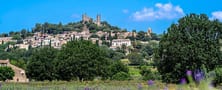
Gassin is first understood through its position. At about two hundred metres above sea level, the village stands on a spur from which the eye runs over the bay, the wine plain, the peninsula and the Massif des Maures. That position is not only scenic; it explains the shape of the village, the density of its streets and the history of a site long chosen for watching, controlling and protecting itself.
The visit therefore works best if you stay attentive to changes in level and to details of the built fabric. Everything here is compressed: passages, steps, small walls, gates and brief squares. Gassin does not need to be large to be rich; it works as a reading post for the landscape, but also as a village that keeps the memory of an old economy of grain, vines, olive trees and mills.
A hill village with still legible ramparts
The medieval core remains the strongest element. The thirteenth-century ramparts, the old gates, the Saracen gate, Rue du Fort and Rue de la Tasco all show a highly coherent defensive settlement. The relief imposes narrow streets, tightly grouped houses and a pedestrian circulation in which the old logic of shelter and control is still felt.
From the high points, the view is not a bonus for visitors. It belongs to the identity of the place. Seeing the bay, the vineyards and the nearby ridges explains why Gassin long acted as a sentinel of the gulf. The village was not placed here by chance; it commands a horizon.
Church, chapels and rural memory
The religious heritage tells another layer of depth. Saint-Laurent chapel in the plain recalls an older presence outside the walls. Later, Notre-Dame-de-la-Consolation church took its place inside the fortified village. Parts of its decoration and portal directly echo the crops that sustained the territory, especially grain and vines.
Several mill ruins, the washhouse, spring paths and the distribution of farmland tell the same story: Gassin was not only a belvedere, but a working commune. The farming memory remains easy to read in the landscape, in the mill routes and in the way the village opens towards the cultivated plain.
Geography, geology and the wider landscape
The village stands on the old crystalline relief that structures the whole gulf. Rock often appears close to the surface, slopes are dry and the soils on the height remain lean. Below, the plain offers softer and more workable land. This contrast between a mineral spur and agricultural low ground is essential for reading Gassin.
At this scale, geography is never static. The eye moves constantly from the village to the vineyards, from the vineyards to the gulf, then from the hills to the shore. That movement gives the place its real measure: a small built footprint, yet a very large radius for understanding the territory.
Botany, garden and Mediterranean crops
The local vegetation extends that structure. On the slopes you find cypresses, olive trees, pines, Mediterranean hedges and modest plants adapted to wind and lack of water. In the plain, vineyards remain a major landmark. Together they create a rather dry and very bright landscape in which cultivated vegetation matters as much as the built fabric.
The L'Hardy-Denonain garden adds an even finer reading. Listed as a remarkable garden, it gathers many Provençal species and shows that Gassin does not turn only towards the panorama. The village also knows how to observe, preserve and pass on a precise local botany linked to memory, childhood and climate.
How to visit Gassin today
The best way is to walk slowly through the old core and seek openings towards the landscape rather than collecting viewpoints quickly. A few lanes, the gates, the ramparts, the church and one high point are enough to understand the site. The rest lies in the way your eye keeps village and outer territory together.
Outside the high season, Gassin becomes even more accurate. Silence returns to the passages, the stone regains relief, the plain reads better and the botany of the village becomes more perceptible. You then see what this promontory still keeps of the rural, defensive and Mediterranean worlds.
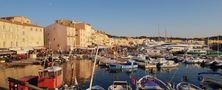
From Gassin, you can easily reach Grimaud for another hill village, or Saint-Tropez to return to the harbour at the end of the gulf.
Sources
Chronicle through time
Gassin: belvedere, ramparts and garden above the gulf
Gassin is read through its height. Ramparts, garden, church and the broad view over the gulf give the village unusual density despite its tight footprint.
