








Walking Through Saint-Tropez
Saint-Tropez makes more sense when you keep the old harbour, the citadel, maritime memory, culture and the rocky slope closing the gulf in view.
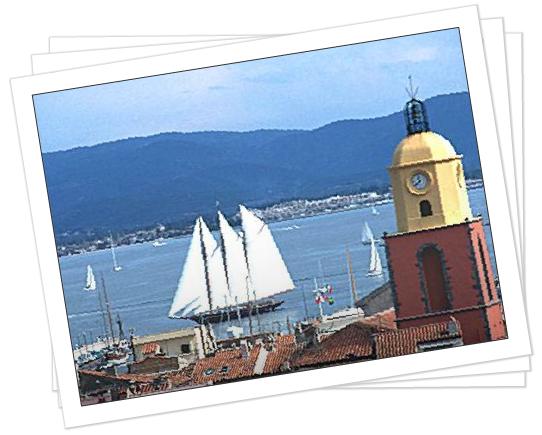
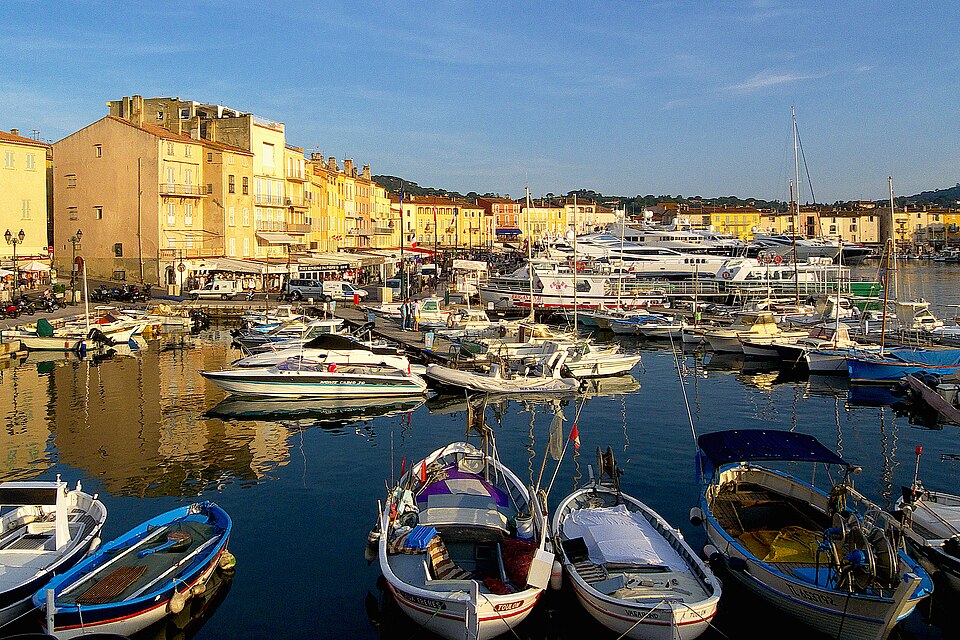
Saint-Tropez draws attention by name, yet the town is best read as an old harbour compressed between sea, slope and defensive lines. Before the busiest tourist seasons, there is here an old anchorage, a fishing and coastal-trading settlement, then a small town that became in the twentieth century both a cultural place and a very busy shoreline.
That density remains the key. Everything fits into little space: the harbour, the lanes, the citadel, the quays, the squares, the facades facing the water and the climbs that suddenly open the view over the gulf. Saint-Tropez is therefore less an extended resort than an old port nucleus that has to be explored on foot, slowly, by looking as much at the slopes as at the shopfronts.
An old harbour shaped by the sea and by defence
The site long lived from coastal navigation, fishing and maritime exchange. The old harbour is not only scenery; it explains the orientation of the town, the immediate closeness of the houses, the modest size of the original quays and the need to defend a valuable anchorage at the end of the gulf.
The citadel on the heights, completed in the seventeenth century, keeps that direct link between the sea and surveillance visible. From the keep, you read in one sweep the shoreline, the curve of the bay, the position of Sainte-Maxime on the opposite shore and the roads leading towards Ramatuelle or Les Canoubiers. That panorama restores the town to its real scale: compact, strategic and turned to the sea long before it became famous for anything else.
Heritage, festivals and local culture
The historic centre still keeps a web of lanes, cool passages, small squares and ochre or pink facades that owe more to the real history of the buildings than to the luxury image often projected onto the town. The Ponche quarter, the stairways, the tight shutters and the brief openings to the water still show a narrow Mediterranean village that was repeatedly rebuilt, repaired and adapted to everyday use.
Local culture is not limited to a postcard either. The Bravades keep alive the memory of the patron saint and of an old civic and military tradition. The Musée de l'Annonciade reminds visitors that Saint-Tropez became one of the active centres of early twentieth-century avant-garde painting around Paul Signac, then other artists who came to work on light, colour and the harbour. Markets on Place des Lices, museums and annual events still give the town a thicker cultural life than the waterfront alone suggests.
Geography, geology and shoreline vegetation
Saint-Tropez stands on the old crystalline bedrock of the Massif des Maures. You can read that in the rough rocky points, the small coves cutting the shoreline and the generally dry soils on the outer slopes. The town itself occupies a sheltered harbour site, but once you leave the centre the relief becomes clearer again.
This geological base also shapes part of the plant landscape. Umbrella pines, tamarisks, mastic shrubs, low hedges, Mediterranean gardens and vineyards on the peninsula create a setting that is less uniform than expected. Even around a very busy town, the local botany remains that of a windy and bright coast where plants have to cope with salt, drought and lean soils.
What to notice while walking
The clearest walk starts early. You can follow the harbour, enter the lanes of La Ponche, climb to the citadel and then return through quieter squares and passages. That route shows how the town constantly alternates between exposure and retreat: open quay, narrow street, busy terrace, shaded corner, sudden viewpoint.
It is also worth stopping over ordinary details: a facade worn by salt, a very steep climb, the alignment of traditional boats with large yachts, the visual links towards nearby beaches and the other villages of the gulf. Saint-Tropez is not interesting only because of its famous signs; it is also interesting through these very concrete frictions between working harbour, tourism, heritage and local life.
The right pace for a visit
The town changes a great deal with the season. In summer, road and pedestrian pressure erases part of the volumes and often reduces the reading of the centre to the crowd itself. Outside peak season, in spring, autumn and even winter, distances make sense again, views open up and the walk recovers continuity.
To read Saint-Tropez properly today, it helps to accept its real measure: a small historic harbour, heavily watched and often saturated, yet still rich in maritime history, urban heritage, culture and coastal landscapes as soon as you slow your pace.
From Saint-Tropez, you can continue towards Ramatuelle to move from the harbour to the hill village, or return to the villages of the gulf page.