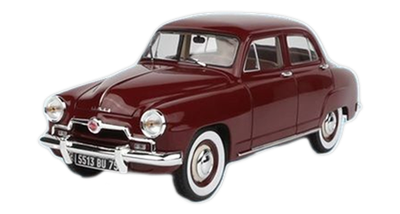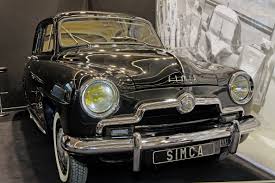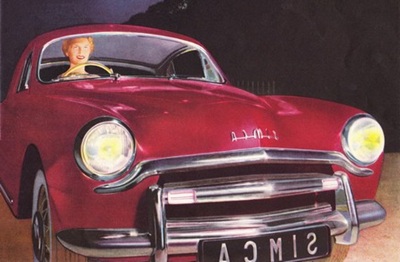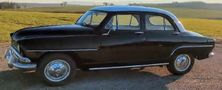




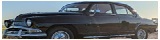
THE SIMCA 9 ARONDE (April 1951)

Monocoque body: a first for Simca, this feature offered increased rigidity and a more spacious cabin.
Distinctive grille: it has a "podium" or "staircase" design.

The Simca 9 Aronde

In the French automotive landscape of the late 1940s, the Simca 9 stood out as an innovative model, strategically positioned against its main competitor, the Peugeot 203. Unlike the latter, which targeted a bourgeois clientele, the Simca 9 distinguished itself by its young and dynamic character, reflecting the aesthetic trends of the time.
Project Genesis and Funding: The development of the Simca 9 began in 1948, under file number 1200x, in the context of post-war European reconstruction. A crucial element of its funding came from the Marshall Plan, the American economic aid program that played a decisive role in the European industrial renaissance.


Design Team and Technical Expertise: The development of this model was entrusted to a team of talented French engineers. Several key figures contributed to its creation:


- Roger Vast, project manager, responsible for mechanical design,
- The engineer Duchard, in charge of body development,
- René Dumas, who orchestrated the design and style of the car.
Technical Specificities and Design: Although some rumors suggested a kinship with the Fiat 1400, the designers affirmed that no part of the latter had been directly used. The Simca 9 thus represented an entirely French creation, testifying to the national know-how in automotive design. The aesthetics of the Simca 9 embodied the spirit of its time. Its lines and colors reflected the fashion trends of the late 1940s, responding to the aspirations of a young generation in search of modernity and dynamism.
Competitive Positioning: Against the Peugeot 203, the Simca 9 offered a more attractive and less conventional alternative. While the 203 represented a traditional and bourgeois approach, the Simca 9 captivated with its bolder and more contemporary side. Innovations and Perspectives: The development of the Simca 9 was part of a movement of reconstruction and industrial renewal. It symbolized the ability of the French industry to innovate and rebuild after World War II, relying on local technical skills and international funding.
The Simca 9, not yet a full-fledged Aronde, was a real commercial success. It won over the public thanks to its modern design, comfort, and reliability.
A 4-door, 4-seater sedan, with a curved windshield, its rear is integrated into the bodywork. It is distinguished by its "podium" or "staircase" front grille, its emblem bearing the brand SIMCA, the first of its kind, and recessed headlights. It also has doors that open in "the right direction". It is powered by the Fiat 4-cylinder in-line, 1221 cm3, 45 hp engine that already equipped the Simca 8.
The rear lights have a metallic frame and the gas filler is hidden under the left rear light, the top of which lifts up like an access hatch.
In June, July, September, and October 51, modifications were made, but Simca did not, for the time being, create a specific model for it. It would be necessary to wait until the following year for this commercial aspect to be created.

Simca Aronde sport coupe

Simca 9 - Coupé (April 1952)

The Simca 9 Coupé, which appeared in April 1952, was a sportier and more elegant version. For 4 months, it was built on the basis of the Simca 8 chassis then, it switched to the sedan platform in July 1952, it was distinguished by its long, streamlined roofline, as well as its framed doors and fixed side windows.
A neat design: With a fluid line, the Aronde coupé had a fluid and dynamic line that contrasted with the more classic style of the sedan.
Cabin: The interior was more plush, with better quality materials and a more meticulous instrument panel.
Aesthetic details: The chrome was more abundant, particularly on the grille, bumpers, and window frames.
Under the hood, it had the same engine as the sedan: if the performance was not breathtaking, it was enough to provide a pleasant feeling behind the wheel.

Simca Aronde 9

Simca 9 - Quotidienne (December 1952)

A car for all budgets, a simplified car: Launched in December 1952, the Simca 9 Quotidienne was a simplified version of the famous Simca 9 Aronde, intended for a wider audience and a tighter budget. It represented an economical alternative while retaining the essential qualities of the range.
Distinctive features:
Simplified equipment: Compared to the Luxe finish, the Quotidienne was distinguished by more basic equipment: absence of some chrome, a more stripped-down interior, etc.
Engine and chassis: It used the same engine and chassis as the other versions of the Aronde, thus ensuring recognized reliability.
Attractive price: Its lower selling price made it an accessible car for a larger number of buyers.
Why was the Quotidienne a success?
An affordable price: It was one of the cheapest new cars on the French market at the time.
Proven reliability: It benefited from the reputation for reliability of the Aronde range.
Simplicity of use: Its simplified equipment made it easy to get started with.
The Simca 9 Quotidienne played an important role in the commercial success of the Aronde range. By offering a more economical version, it allowed a wider audience to access the Simca brand and thus contributed to strengthening its position on the French automotive market.

Simca 9 - Chatelaine / Commerciale / Messagère (January 1953)

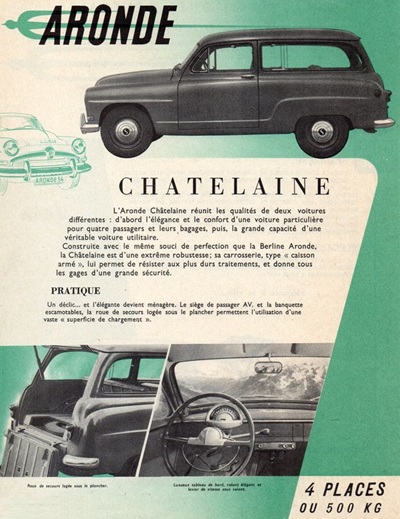
Versatile cars: Launched in January 1953, the Simca 9 Chatelaine, Commerciale, and Messagère completed the "Aronde" range by offering utility and family versions. These models, derived from the sedan, offered increased versatility while retaining the comfort and reliability of the range.

Simca Aronde 9 Chatelaine

The Simca 9 Chatelaine: The Family Wagon

The Chatelaine was the wagon version of the Aronde. It was distinguished by its elongated rear, allowing for a large loading volume. Its sliding rear side windows made it easy to access the trunk.
Versatility: Perfect for large families or leisure activities, the Chatelaine offered an ideal compromise between comfort and loading capacity.
Aesthetics: Its elegant and harmonious design allowed it to blend into the urban landscape while displaying a certain originality.

Simca Aronde Commerciale

The Simca 9 Commerciale: The Utility Vehicle

The Commerciale was an intermediate version between the sedan and the Messagère. It had a glazed rear part, thus offering appreciable light while retaining a useful loading capacity.
Versatility: The Commerciale could serve as a utility vehicle for professionals as well as a leisure car for private individuals.
Modularity: Thanks to its folding rear bench seat, it offered great modularity of use.

Simca Aronde Messagère

The Simca 9 Messagère: The Van

The Messagère was the utility version of the Aronde par excellence. Entirely sheet-metal at the rear, it had a large loading volume and great robustness.
Robustness: Designed for intensive use, the Messagère was particularly popular with craftsmen and small traders.
Capacities: Its flat floor and smooth interior walls made loading and unloading easy.

Common points and specificities

Engine: These three models were equipped with the same engine as the sedan: a 1221 cm³ in-line four-cylinder developing 37 horsepower.
Chassis: They rested on the same chassis as the sedan, thus guaranteeing good road holding and appreciable driving comfort.
Evolutions: During their production, these models experienced some aesthetic and technical evolutions, particularly in terms of finishes and equipment.

Simca Aronde Intendante

Simca 9 - Intendante (September 1953)

An elegant and comfortable utility vehicle:
Launched in September 1953, the Simca 9 Intendante came to enrich the Aronde range by offering a more comfortable and better-equipped alternative to traditional utility vehicles. This version, derived from the sedan, offered an interesting compromise between the loading space of a utility vehicle and the comfort of a private car.

Distinctive features:


Separate cabin: The Intendante was distinguished by its cabin separated from the loading area, thus offering a comfortable workspace for the driver and his passenger.
Interior fittings: It had interior equipment similar to that of the sedan, such as a comfortable front bench seat, a complete dashboard, and sliding windows.
Loading area: The rear part, entirely sheet-metal, offered a large and modular loading volume thanks to a folding rear bench seat.
Aesthetics: Its design, inspired by the sedan, gave it an elegant and modern look.

Versatility

The Intendante was aimed at a varied clientele:
Craftsmen and traders: It was appreciated for its robustness and loading capacity.
Health professionals: Its separate cabin made it an ideal vehicle for doctors, veterinarians, and representatives.
Families: Thanks to its folding rear bench seat, it could also serve as a family vehicle for leisure. Mechanics
The Intendante was equipped with the same engine as the other versions of the Aronde: a 1221 cm³ in-line four-cylinder developing 45 horsepower. This engine, associated with a four-speed manual gearbox, offered sufficient performance for professional and family use.

Evolution

During its career, the Intendante benefited from some aesthetic and technical evolutions, particularly in terms of finishes and equipment.

Simca Aronde Grand large

Simca 9 - Grand Large (1954)

A jewel of comfort and elegance:
The Simca 9 Grand Large was a top-of-the-range version of the famous Aronde, intended for a clientele looking for both comfort and elegance. Launched in 1954, it was distinguished by its spacious cabin and meticulous equipment.

Distinctive features


Cabin: The interior of the Grand Large was more luxurious than that of the other versions of the Aronde. The seats were softer, the trimmings more refined, and the equipment more complete.
Fixed windows: The rear side windows were fixed, which reinforced the impression of solidity and refinement.
Finishes: The Grand Large benefited from careful finishes, with abundant chrome and quality materials.
Onboard space: Despite its relatively contained exterior dimensions, the Grand Large offered generous interior space, especially in the back seats.

A comfortable road car

The Grand Large was designed for long distances. Its suspension comfort, combined with careful soundproofing, made it a pleasant road car.

An elegant aesthetic

The design of the Grand Large was more assertive than that of the other versions of the Aronde. Its fluid lines and abundant chrome gave it an elegant and timeless look.

Mechanics

Under the hood, the Grand Large was equipped with the same engine as the other versions of the Aronde: a 1221 cm³ in-line four-cylinder developing 45 horsepower. This engine, associated with a four-speed manual gearbox, offered sufficient performance for road use.

Simca 9 Coupé de ville

Simca 9 - Coupé de ville (September 1954)

The Simca 9 Coupé de Ville, born from a fruitful collaboration between Simca and Facel Vega, is a true icon of automotive elegance of the 50s. Launched in September 1954, it quickly established itself as a benchmark in the world of sports coupés.

A timeless design signed by Facel Vega

The design of the Simca 9 Coupé de Ville is the work of Jean Daninos, the founder of Facel Vega. Its fluid and harmonious lines, its high beltline, and its generous rear wings give it a look that is both sporty and refined. The cabin, neat and spacious, offers comfort worthy of a grand touring car.

Proven mechanics

Under the hood, the Coupé de Ville uses the mechanics of the Simca Aronde, although it is not a pure and hard sports car, it is distinguished by good road holding and an appreciable driving experience.

Limited production and critical success

Produced in small series, the Simca 9 Coupé de Ville quickly became an object of desire for car enthusiasts. Its rarity and unique design make it a highly sought-after collector's car today.

Simca 9 Lowered 55

Simca 9 - Berline Luxe "la Surbaissée 55" (October 1954)

The Simca 9 Aronde Berline Luxe "la Surbaissée 55", introduced in October 1954, is an emblematic version of the Aronde range, reflecting a desire for increased modernity and elegance in popular French sedans. This model is distinguished by lower lines and a refined style, responding to the design trends of the 1950s.

Technical characteristics:

Engine: 1,221 cm³ "Flash" in-line 4-cylinder, developing 45 horsepower.
Maximum speed: approximately 125 km/h.
Transmission: 4-speed synchronized manual gearbox.
Suspension: independent front and rigid axle with leaf springs at the rear.
Brakes: drums on all four wheels.

Dimensions:

Length: 4.18 m
Width: 1.58 m
Height: 1.52 m
Wheelbase: 2.44 m

Design and comfort:

Lowered line: Compared to the classic Simca 9, the "Surbaissée 55" has a lower roof, giving it a more dynamic and modern look.
Interior finishes: Particular care is taken with the materials with comfortable seats, quality fabric trimmings, and a simplified dashboard. Chrome and exterior details: The chrome ornaments, hubcaps, and redesigned bumpers add a touch of sophistication.

Production and market:

This model was aimed at a clientele looking for an elegant but affordable sedan, positioning Simca as a major player in the European popular car market. The "Surbaissée 55" was produced until the arrival of the subsequent evolutions of the Aronde in 1956.

Simca 9 Week-End

Simca 9 - Cabriolet Week-End (September 1955)

A breath of freedom
The Simca 9 Cabriolet Week-End, born from a collaboration between Simca and Facel Vega, is a true hymn to freedom and the pleasure of driving. Launched in September 1955, this convertible combines the elegance of a sporty line with the simplicity of a popular car.

An elegant and sporty silhouette

The design of the Simca 9 Cabriolet Week-End is the work of Jean Daninos, the founder of Facel Vega. Its fluid and dynamic lines, its soft top, and its wraparound windshield give it a look that is both sporty and elegant.

A comfortable and functional interior

The interior of the Week-End is designed to offer maximum comfort to its occupants. The wraparound bucket seats offer excellent support, while the controls are within easy reach. The dashboard, simple and efficient, is characteristic of cars of this era.

Proven mechanics

Under the hood, the Week-End uses the mechanics of the Simca Aronde, an in-line four-cylinder offering sufficient performance for a pleasant drive. Although it is not a pure and hard sports car, it is distinguished by good road holding and an appreciable driving experience.

See the video: Report: One hundred days of traffic » on INA

Production and market:

A model offered in a limited series to appeal to a privileged clientele attracted by accessible convertibles. Mainly assembled in the specialized workshops of Henri Chapron, famous for his transformations of Simca vehicles.

Simca 9 on an assembly line at the factory

The Simca 9, a car representing its era

The Simca 9 embodies a major step in the history of the French automobile. By combining elegant design, technical innovation, and accessibility, this model marked the 1950s. Available in several versions, from the sedan to the convertible version, it knew how to captivate a varied clientele, looking for a reliable and modern car.


Symbolizing the economic and industrial renewal of post-war France, the Simca 9 also played a key role in Simca's rise on the European market. The legacy of the Simca 9 is undeniable. It paved the way for many other popular models and contributed to the growth of the French automotive industry.


In summary, the Simca 9 is:
A popular car: Accessible to a wide public, it democratized the automobile in France.
A modern design: Thanks to its fluid lines.
Reliable mechanics: Its robust engine ensured it a long life.
An era: It embodies the spirit of the "Trente Glorieuses" (Thirty Glorious Years) and the desire for mobility of the French.
What will we remember about the Simca 9? A car that has crossed the decades and kept all its freshness. A testament to the ingenuity of the French automotive industry.