

THE SIMCA P60

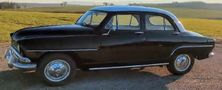
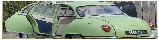
The Simca Aronde P60, launched in 1959, represents a significant evolution of the Aronde range. Designed to personalize the 1960s, the P60 stands out for its modernized style and improved performance.
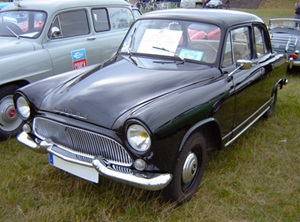
The Simca P60 Bacalan refused by Henri Pigozzi

The Aronde P60, premiered at the Paris Motor Show in autumn 1958, embodies the elegance and innovation of French automobiles of that era.
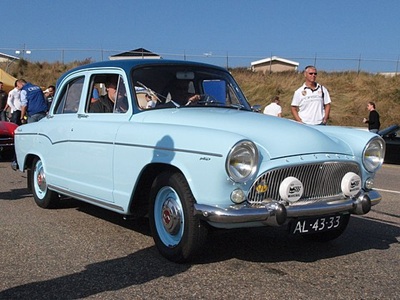
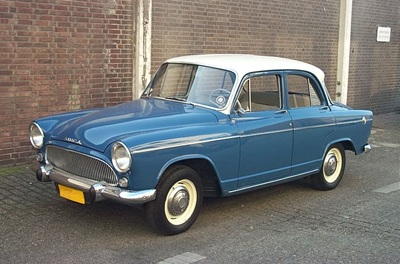
The P60 is an evolution of the Aronde launched in 1959, characterized by a more modern and aerodynamic style with a new vertical grille. Heir to advanced technological know-how, this car marked a key step in the evolution of the Simca brand, while remaining faithful to the traditions of comfort and style. The P60 is distinguished by its refined design and taut lines, thus offering a futuristic vision of the automobile of the 1960s.
Despite its more modern style, the P60 remained in the Aronde's lineage in the Simca spirit, with a simple and sober approach to the automobile. The style of the P60 was more flashy than that of the Aronde, and this look quickly lost its appeal in the face of changing fashions.

Simca Aronde P60

1959: The Launch of the P60

A new version of the Aronde, the P60 presented an entirely new style that personalized the 1960s. Its body with a very open grille and its almost futuristic dashboard testified to this desire for modernity. Launched in 1959 at the Grand Palais Motor Show, the Simca Aronde P60 quickly conquered the market. The meaning of "P60" is "Personalization 1960s," with an expanded range and more finishes. Available in 25 two-tone colors, ten finishes, and three engines, the P60 was able to adapt to the different tastes and budgets of customers.
The commercial success of the P60 was not long in coming, with 194,553 units sold in 1959. However, despite its spectacular start, its style quickly became outdated in the face of changing fashions. Technically, the P60 uses the mechanics of the last Arondes, including the "Flash" and "Rush" versions of the 1300 cm3 engine developing up to 62 hp.

1963: End of Production

The production of the Aronde ended on May 22, 1963, on the assembly lines of the Poissy factory. This date marks the end of an era for the Aronde range.

Simca Aronde P60 Monaco

Versions and evolution

At the beginning of 1958, the management produced a series of 700 hybrid P60s, with a curved roof without a rear visor and three-part bumpers. Pigozzi's reaction to this discovery was extremely negative and he ordered the immediate withdrawal of this series. The 700 cars were stored in Bordeaux, on the Quai de Bacalan, from which they get their nickname. They were later sold in Eastern European countries, often used as taxis. There are said to be only three left in France, one of which is exhibited at the "CAAPY" museum (Collection de L'Aventure Automobile à Poissy).

Year 1959

For the 1959 model year, the Aronde underwent significant changes, almost justifying the term new car. It was then renamed P60, indicating its supposed technological advance for the 1960s. The P60 was presented at the 1958 Motor Show in Elysée finish, equipped with a 1290 cm³ engine with 48 horsepower, already used on previous models. Although the central structure remained unchanged, the front, rear, and the flat roof with an overhanging visor on a larger rear window gave the P60 a modern look, distinct from the "Ligne Océane".

Year 1960

In January 1960, Simca reached a milestone with the production of the millionth Aronde, an Étoile 6. The range then adopted a new engine, the Rush, offering improved performance.

Year 1961

The production of 164,297 units in 1961 marked the gradual entry of the Aronde towards the end of its career. A new five-bearing engine, named Rush, equipped the entire range, and the exterior decoration was simplified with straight moldings. It should be noted that the P 60 name disappeared that year. Simca continued to prosper thanks to exports, despite the imminent arrival of a new model in development. The P60 then presented a new line including a vast rear window, a ribbed roof, a plunging flat hood, a new grille, and bumpers with rubber bumpers. The dashboard now included a horizontal reading dial, called "Simcascope".

Simcarama 1961

Simcarama

At the Paris Motor Show in 1961, Simca organized free screenings of films about the automobile, called Simcarama, at the Cinéma des Champs-Élysées. These events illustrated automotive evolution with new and captivating films.
Interior layout and festival
The film allows you to discover the interior layouts of the Aronde Étoile 6 and Étoile 7 models. In parallel, Simca organized an automobile sports festival, in partnership with Shell, Kléber-Colombes and Bendix, to promote air sports and support social works. Finally, all the P 60s benefited from a new rear suspension with longitudinal leaf springs and coil springs.

P60 - Étoile six / Étoile seven

The Simca Aronde P60 includes models such as the Super Deluxe and the Deluxe 6. The Deluxe 6 CV and Super Deluxe 7 CV versions retain the old body, but bear the P60 monogram on the front right fender. The Deluxe 6, equipped with a 1,098 cm³ engine developing 40 hp, was used for a fuel consumption test, covering 607 km with a consumption of 6.39 l/100 km.
Although the Deluxe 6 and 7 were part of the P60 series, they retained the old body. The Simcamatic system was highlighted for its ability to start in second gear on flat ground and on a hill in first gear without requiring the use of the handbrake, thus offering smoother driving and no overconsumption of fuel.
The P60 Étoile models, despite their affordable price, gained importance in the Aronde range. These models offered the "Grand Air" option with a soft sunroof and a pleasant, although simple, interior presentation, with seats with a regular and rectilinear cut. The Étoile 6 model was offered at 6,190 F and the Étoile 7 at 6,490 F. The millionth Aronde, an Étoile 6, was produced on January 20, 1960.
This model from the 1960 Aronde range adopted the P60 body in a simplified presentation. The bumpers were devoid of rubber bumpers, and the side moldings adopted a clean profile. The headlight doors were painted, and the wheel covers adopted a simplified model.

The Étoile 6 (1961)

Étoile 6 brochure

The Étoile 6 model, with the P60 body, presented a new line without a break on the belt molding. The wheel covers were chromed and smooth. The 1090 cm³ Rush engine provided 42 hp, with a 52 hp version available on the Étoile 7. Engine and performance: The five-bearing Rush Super engine developed 62 hp at 5,200 rpm and had a volumetric ratio of 8.5:1. This engine, renowned for its performance, was also associated with world records, including the one obtained by the Ariane in Miramas.

The Étoile 6 (1962)

At the end of its career, this model adopted the P60 body and was available in five solid colors. It was equipped with the 6 CV Rush engine developing 42 hp. The "Grand Air" full soft sunroof option, a Webasto roof, met with some success. A sheet metal sunroof designed by Paul Née was also offered for the sedan and coach versions.

The Super Étoile 6

This version would also appear in 1962. For 1962, the Super Étoile 6, with a better finish, was distinguished from the Étoile 6 by its bumper guards with rubber tips, its front bench seat with separate backrests, and its two-tone body. It was offered at a price of 6,850 F, being cheaper than the 7CV Élysée, but more expensive than the Étoile 6.

Simca Aronde P60 Elysée

P60 - Elysée

The Élysée, with the same engine as the Étoile 7, changed little for the model year.
The Élysée P60 became the flagship model of the Aronde range for 1959, with a new body designed to meet the tastes of customers looking for more luxury.
On the Élysée and other versions, the wheel covers no longer bore the central "S", and the cap was now solid red.

Upholstery of the 1962 models

The Super Étoile 6 and Élysée shared similar upholstery, with a leopard-print fabric design, which may seem questionable, but with the advantage of adjustable backrests. The front bench seat remained a surprising choice, given the narrowness of the Aronde.

P60 - Monthléry

The Montlhéry P60, similar to the Elysée model, was equipped with a 1300 cm3 engine. This flagship model, with its 57 hp engine, was the most powerful sedan in its category in France. It had large-diameter wheel covers and a jacquard fabric interior.
Options such as the "Simcamatic" automatic clutch were available for smoother driving.
In 1962, the Monthléry increased to 70 hp and became the Monthléry Spéciale.

P60 - Grand Large

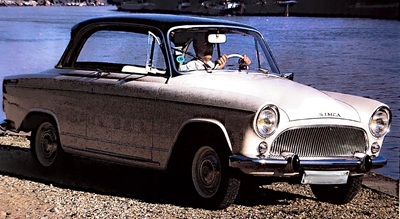
The Grand Large pillarless coach adopted the new "P60" stylistic codes, with a large grille, a softened hood, and an enlarged rear window. Inside, it featured a new dashboard with the Simcascope, a trapezoidal speedometer.
The production of the P60s, including the coaches, was transferred to Poissy, which reflected a major industrial turning point for Simca, highlighting the rise of this manufacturing site.
Due to the absence of a side pillar and longer doors, the structure required specific reinforcements.
Despite its aesthetic and technical qualities, the Grand Large did not manage to convince enough buyers and due to a lack of demand, it was removed from the catalog in 1960 in favor of the Monaco, which was more conventional and better adapted to market expectations.

Simca Aronde P60 Monaco

P60 - Monaco P60

The Simca Aronde P60 Monaco was unveiled at the Paris Motor Show in October 1958. It retained the same wheelbase as the 1951 Aronde but was distinguished by its 1,290 cm³ engine with 7 fiscal horsepower, offering a power of 57 hp (43 kW).
This luxury version of the Grand Large was characterized by an innovative metallic paint, particularly on the Monaco Spéciale models and the Montlhéry Spéciale sedan, which gave them a modern and elegant look.
The Monaco, sporting a gold-striped side arrow, was equipped with the 60 hp SAE Flash Spécial engine, bringing a clear improvement compared to the 48 hp Flash. It also benefited from a new rear suspension with four springs, two coil springs being added above the axle to improve comfort and road holding.
In 1961, the Monaco evolved with a new needle speedometer and the Rush Super engine with a five-bearing crankshaft and a volumetric ratio of 8.5:1. This 62 hp SAE engine allowed the Monaco to reach a speed of 140 km/h. A simple rectilinear side molding now replaced the side arrow.

P60 - Ranch P60

The Simca Aronde Ranch, a high-end model, is distinguished by its two-tone finish and its chrome bumper guards. Inspired by cars of the 50s, it has a ponton-type design and a chrome grille.
Its greatest asset is its rear part: a wagon with a two-part opening, practical for loading. The 1290 cm3 Rush Super engine develops 62 horsepower, offering better reliability thanks to its five bearings.
The interior is covered in imitation leather, a durable material but problematic in summer. The dashboard is minimalist with a speedometer, an ashtray, and a gear lever placed to the right of the steering wheel. The ignition key is located to the left of the steering wheel, a practical and unusual detail.